
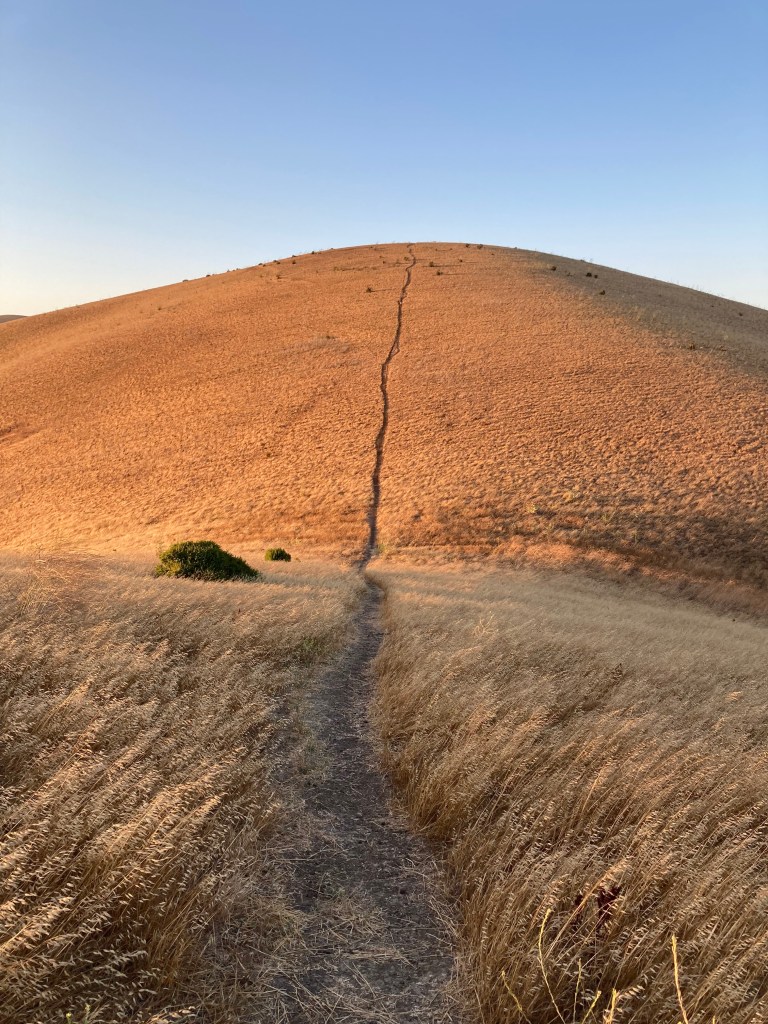
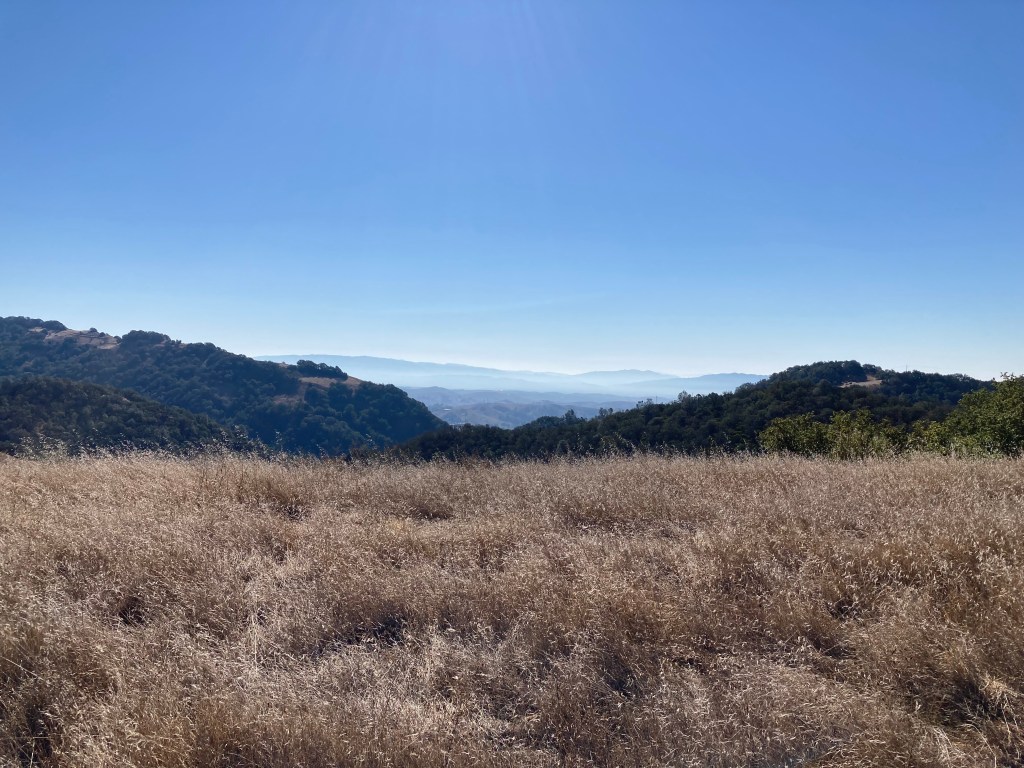
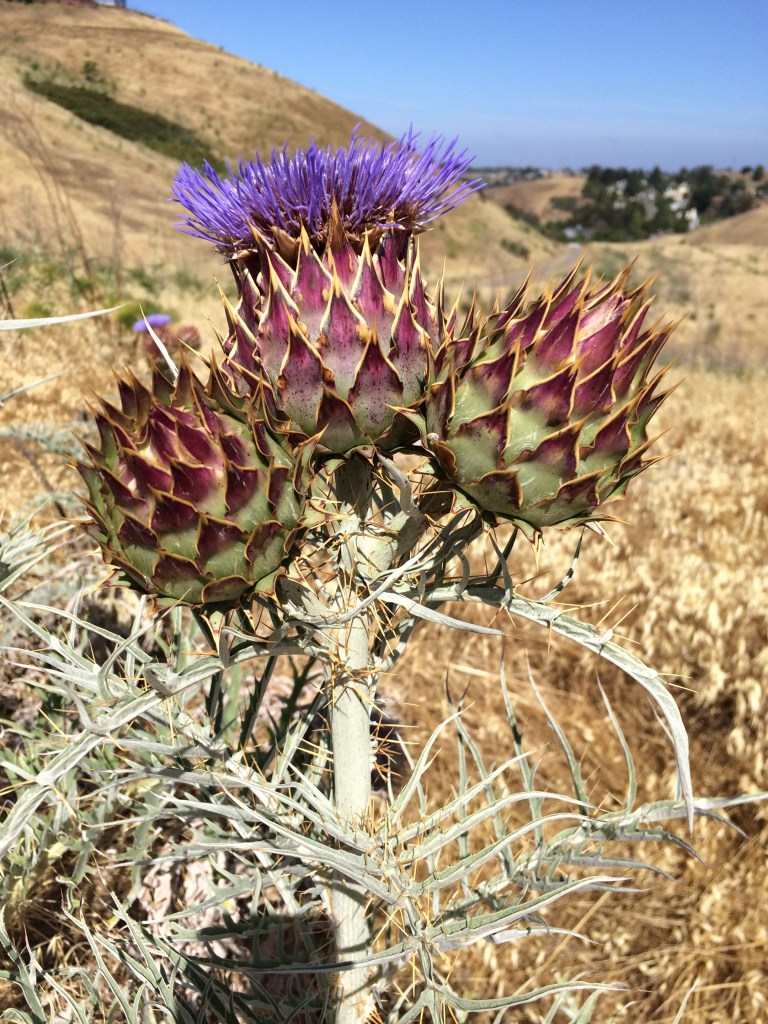
People rave about California’s natural beauty. I admit I found it hard to appreciate that beauty when I first moved here from the East Coast. Parched, rocky hills carpeted with brown, crunchy grasses only reminded me of the possibility of wildfires. The vegetation that was somewhat green in summer–like giant thistles and coast live oak trees–looked prehistoric and threatening with their thorns and spiky leaves. The dirt beneath my feet on the hiking trails was bone dry with deep, jagged cracks. Even at the ocean, the seaside cliffs were craggy and the waves were monstrous.


I had always found joy and comfort in the natural world. Even something simple like seeing a sparrow perched on a barbed wire fence or a dandelion growing up through a crack on the sidewalk made me hopeful. Those little surprises of resilience in nature gave me daily inspiration and helped keep me going when life got challenging.
My early forays into the California wilderness didn’t bring my soul that same peace. Living in California was so different from living in New England, and I felt lost. I was desperate to find my place, to figure out where I fit in, to find something that would spark joy.
Eventually, I realized I was looking at California with my East Coast eyes and not really opening myself to its unique beauty. So, in the moments between searching for a job, adjusting to life with a new husband and two stepkids, and setting up a home for our blended family, I started learning everything I could about California’s natural world.
I read articles, watched webinars, and went on walks and boat rides led by naturalists. I learned about river otters, sea otters, bats, beavers, seals, sea lions, birds, tarantulas, and bobcats and how they adapt and survive in California’s many ecosystems. On walks with my husband in nearby hills, I started noticing just how much life exists within the parched land and between the spiky leaves–lizards, spiders, coyotes, mice, owls, hummingbirds, and more.
And, I saw the poppies. Beautiful native California poppies growing in the seemingly most barren, drought-stricken places. On those walks in the hills, when everything around us was brown, we’d come around a corner and find poppies or even just one poppy, growing happily, with bright green stems and leaves and dazzling orange petals.
The stunning surprise of those native flowers blooming made me excited to learn more about the plants native to California. Back on the East Coast, I had loved working in the garden and was very familiar with the native plants of Eastern Massachusetts. But, in Northern California, I was a stranger in a strange land. Everything was new to me.
On Instagram, I was led to Nicholas Hummingbird (@california_native_plants), an Indigenous man in Southern California who teaches online classes and webinars about native California ecology and how that ecology has been changed and destroyed through historic and ongoing colonialism. He also teaches how to convert land back into balanced spaces filled with biological diversity through native plants.
His classes are incredibly powerful. They changed my life. I learned to appreciate this rugged land, with its resilient life that faces extremes of all kinds and survives. And, understanding how drastically and violently the native landscapes and peoples were changed and nearly eliminated from California made me want to do something to help heal and restore this amazing place.
I’m starting with the small piece of land that I’m privileged to care for here. Over 40 years, the previous occupants of the house upon this land brought in ornamental roses, tropical lilies and irises, and fruit trees. They installed brick pathways and painted wooden raised beds and terraces. They buried plastic trash bag material and landscape fabric deep in the soil to control weeds. They mulched the entire yard with wood chips that were dyed red. They decorated between all the paths and pavers and beds with river rocks–and glued them down (!), giving them a fake glazed, wet look. They essentially removed all traces of native California flora and fauna.
Now it’s my mission to bring them back. I want to share my journey with others so more people can learn about how important native plants are to our ecosystems and do their part to restore the land. But, most of all, I want others to find the joy and beautiful surprises that the natural world offers if we take the time to see.

Resources:


 Putting Down Roots
Leave a comment