When I first started buying native plants, I was kind of an idiot. I’d go to a nursery, find the California natives section, and pick up a plant that looked interesting or had pretty flowers. One of this, one of that. I’d read the tags or signs to see if something needed full sun or shade, lots or minimal water, but I didn’t do a whole lot of research beforehand.
I mean, I did some research. I attended a guided walk at a native plant garden in a local state park and took pictures of the plants that had good medicinal properties, like mugwort. I scanned a book or two. I learned that buckwheat, California fuschia, and sagebrush are easy to grow. I knew I wanted orange poppies like the ones I had seen in the hills nearby and the yellow ones I saw on my hikes at Point Reyes National Seashore. I knew milkweed was important for Monarch butterflies and other pollinators.
So I took my treasures home from the nursery and put them in the ground wherever I could find a space that wasn’t occupied by the non-native rose bushes, lilies, and irises planted by the previous homeowner. And, even though I had read the tags at the nursery, in my mind I somehow had the ridiculous idea that all California native plants are adapted to full sun, dry conditions, and clay soil.
(I’m blushing and shaking my head in embarrassment as I write this. I was such a dingleberry.)
You can probably guess that a lot of those initial natives I planted did not fare very well. Amazingly, most of them are still alive now, two years later, but they’re not necessarily thriving.
Where did I go wrong? Here are 6 lessons I learned by taking online classes with Nicholas Hummingbird, consulting with experts like Soft Earth Landscapes, and using resources like Calscape.org and Calflora’s What Grows Here site.
- California is not Massachusetts. I know, I know–that’s obvious, right? West Coast vs. East Coast, generally temperate vs. cold for several months out of the year, dry vs. humid, etc. But what I mean is that California is much more nuanced and complicated, partly because it’s just so much larger, but also because it’s much more diverse. California has many different microclimates, and different plants are native to different areas within the state. That public native plant garden that was just 4 miles from where I live? It has very different growing conditions: it’s at a lower elevation, gets a lot hotter in summer, is more protected from the wind and closer to wetlands than the yard I tend. So the same plants that thrive there may not work here. Which leads me to #2…

- Nurseries, even those specializing in native plants, have many more plants available than will work in your location. They need to meet the needs of customers living in several different microclimates. I’ve even mistakenly bought plants from my local native plant society group that don’t naturally grow where I live. Since I’m trying to restore the land back to its original beauty and biodiversity, I need to be more careful and do good research. I now use Calflora.org, enter my address, and get a list of plants that are native to this specific neighborhood. (And, I still make mistakes.)
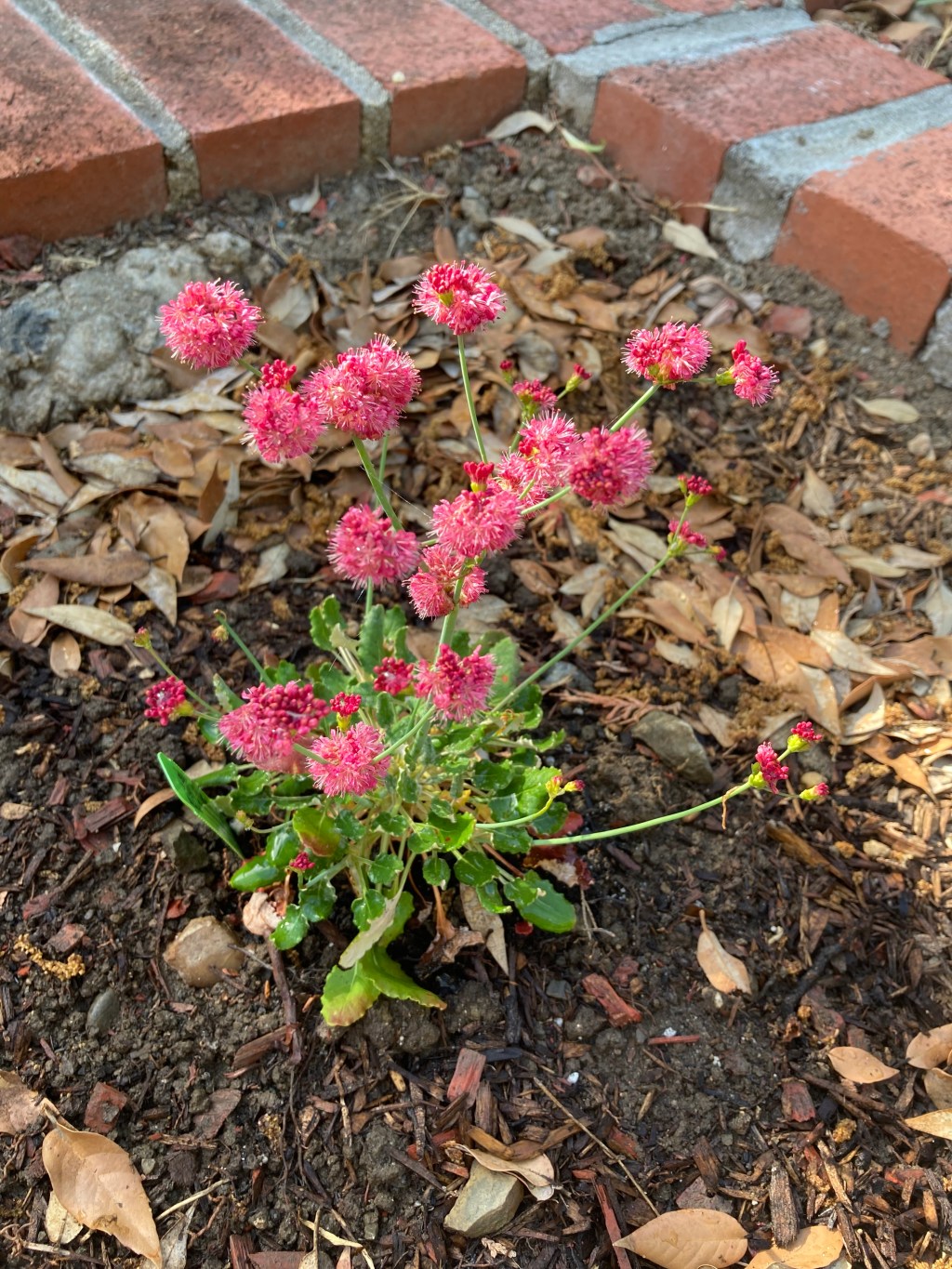
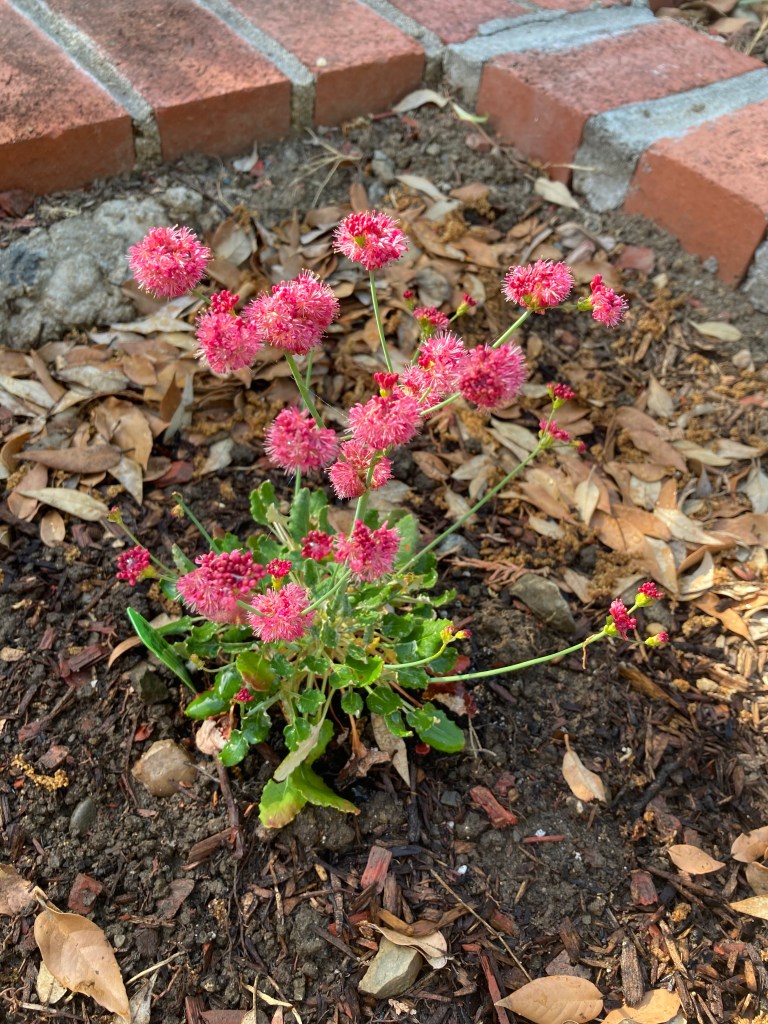
Some of the first native plants I bought–two Red-flowered Buckwheats–went in the ground because I loved the color of the flowers (and marveled at them on Instagram). But their leaves tend to shrivel up unless I water frequently, and they produced a lot fewer flowers this year. Recently, I learned those lovely plants are native to the Channel Islands of Southern California. They’re used to sea spray in the air, not the dry, hot, windy summers of the hills of Vallejo.
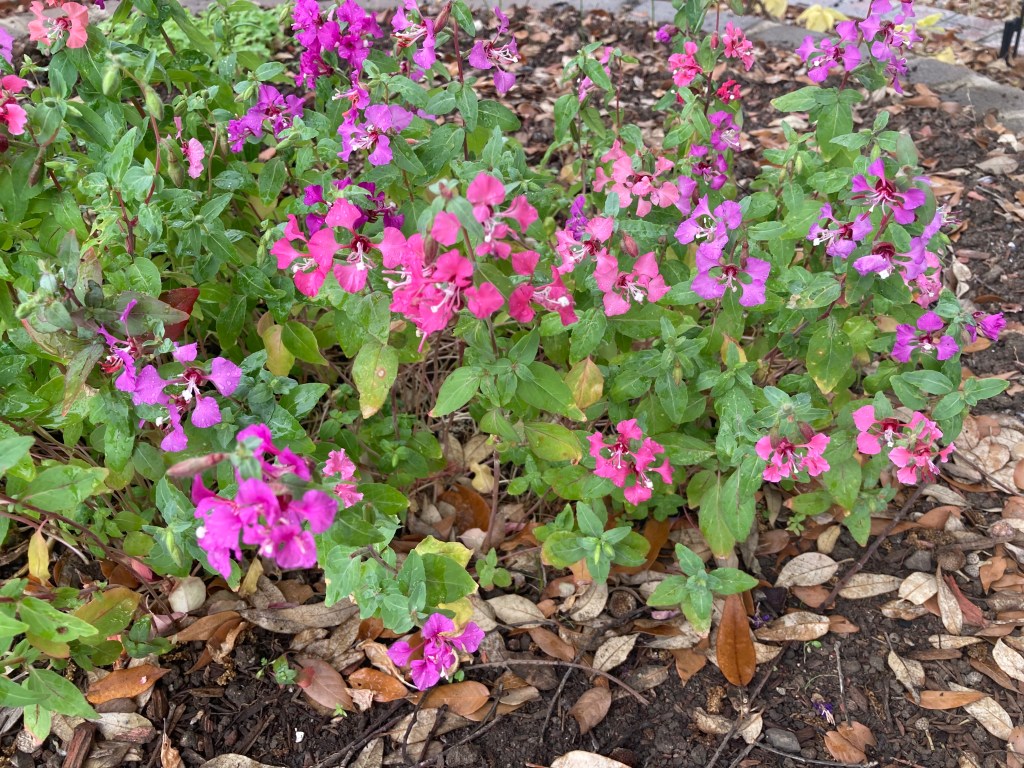
- Native plants need friends. I knew from reading The Hidden Life of Trees that trees communicate with each other through their root systems and fungal networks below the soil. I didn’t realize that this was also true of other plants. While some plants and trees prefer growing away from others of their own species, most of them need to grow near one another. Because they not only communicate, they also nurture and help each other. So, when I buy singles of different native plants and pop them in the ground without their brother and sister plants nearby, I make life harder for them.
- Non-natives can be bullies. Invasive species can choke out native plants and even change the soil so that it’s toxic to them. Non-natives can monopolize water and nutrients. When I planted natives, which tend not to need much watering once established and are used to native soil, next to rose bushes and fruit trees, which need lots of water and fertilizer, I made the conditions difficult for the native plants. To really give the native plants a chance to thrive, I should remove the non-natives altogether. (I’m in the process of doing that now–more on that in future posts.)
- Don’t judge a native (plant) by its summer. Many California native plants go dormant during the hot, dry summers. (Again, this is not Massachusetts where winter is the dormant season.) Their leaves may turn brown and curl up or fall off. It really can seem as if they’re dead. But I need to resist the urge to dig them up and move them. Summer is a time to wait and rest. After the fall and winter rains come, things will be different.
Also, I really have to force myself not to turn on the hose when I see native plants fading in the summer heat. Christopher from Soft Earth Landscapes explained to me that when the plants are dealing with oppressive temperatures, watering them heavily is like drowning them. They can’t handle the extreme heat and excessive water at the same time.
- First they sleep, then they creep, then they leap. I knew this rhyme for perennials when I lived in Massachusetts, but it’s true for California native plants, too. I’m an impatient, slightly obsessive gardener. I walk around the yard multiple times every day mostly to soothe my soul, but also to see how the plants are doing and to observe any tiny changes. So I have to remind myself that just because a plant isn’t exploding in growth after a few weeks doesn’t mean it’s unhappy. It’s probably concentrating on establishing its roots before shifting energy and nutrients to the growth above the surface. I need to give native plants time. A lot of time.
That may be the hardest lesson to follow. The process of converting the land I tend back to all native plants will take many years, and not just because I can’t devote all my time to it. The house I live in was built in the 1980s, so there are at least 40 years of changes to the land beneath it to undo.
That’s a big part of why I started this blog–to document the changes along the way. So I can look back later and see how far the plants have come. So I can maybe help others to learn from my mistakes. And, so we can all celebrate the wins together, no matter how small.


 Putting Down Roots
Leave a comment