A week or so ago, it felt like spring was here. But now it’s been pretty chilly for several days, even near freezing at night. We did have one night of a good, soaking rain, and the mornings are damp with foggy dew, so the plants are getting some water, but I have been worried about the wildflower seedlings.
Because I’m still getting to know California native plants, it’s hard to figure out if certain plants are struggling–or if they’re just quiet for winter. I have a spreadsheet of all the plants I’ve put in the ground, when they bloom, and when they go dormant (if at all), but I’m trying to learn mostly by observation. The spreadsheet is helpful, but I feel silly using it sometimes. I’m seeking a stronger connection with the natural world, not more time in front of my laptop!
Happy wildflowers
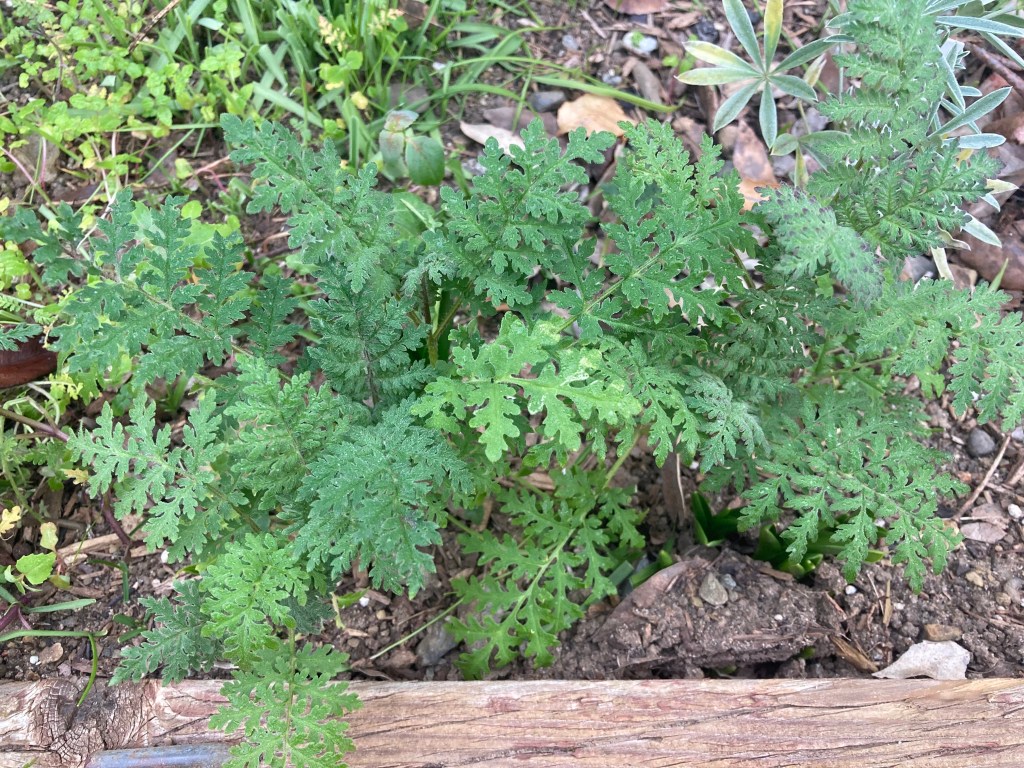
Some of the wildflower seedlings are doing great. Elegant Clarkia (Clarkia unguiculata), Purple Innocence (Collinsia heterophylla), and Lacy Phacelia (Phacelia tanacetifolia) are getting pretty tall and leafy in a lot of spots in the yard.
Wildflowers with mixed results
The California Poppies and a lot of the lupine seedlings are having mixed success, mostly due to some critter feasting on them. Even though the poppies were the first of the seeds to emerge from the soil, most of them now are either gone or very small. I’m sad because poppies can start blooming in February, but I don’t think that’s going to be the case for these.
Some of the lupines are going strong, although you can see in the photo below that a couple of the leaves on this one have been chewed.

Struggling and/or deceased?
The Red Flowering Currant (Ribes sanguineum) bush, which is supposed to be a fast grower and bloom in winter, hasn’t done either of those things, and its leaves look a little sad. But it does have tons of little green buds on its branches. Maybe it’s still getting established.
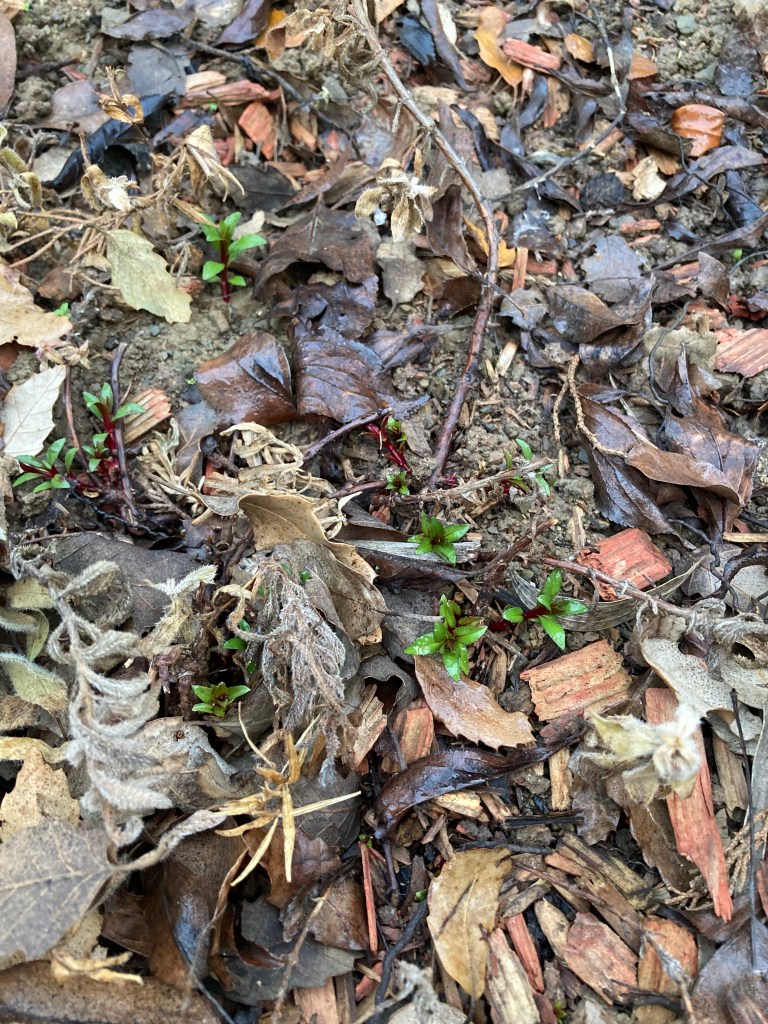
While there are no tiny buds on the Western Redbud (Cercis occidentalis) yet, I was excited to see signs of growth on the California Wildrose (Rosa californica) and Western Columbine (Aquilegia formosa) plants.
There may be a few casualties–I’m 90% sure the Black Sage is dead, and I’m not seeing any signs of life whatsoever for the Spice Bush and Woolly Sunflower plants. But I’m holding out hope.
Strong and healthy heavy hitters
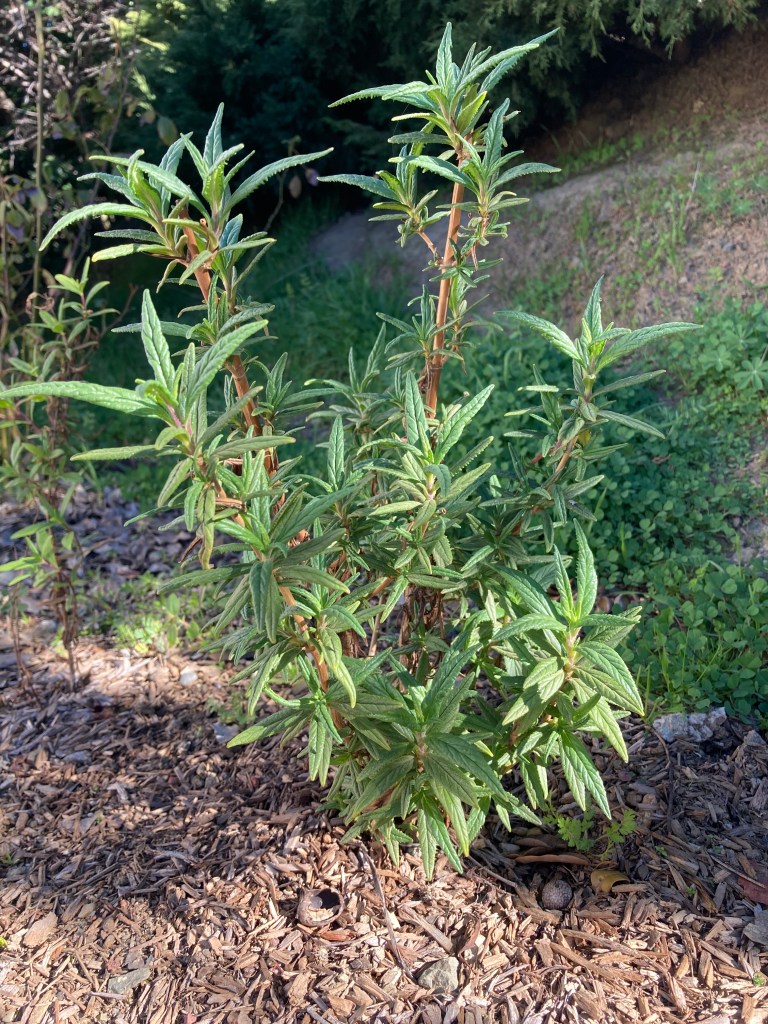
Who’s kicking butt, growing strong, and making me do a happy dance every time I see them? It’s the heavy hitters like Bush Monkeyflower, California Buckwheat (see my previous post), Hummingbird Sage, Coffeeberry, Sagebrush (see my post about my love affair with sagebrush), Penstemon, and California Fuschia. Most of these are straight species, not cultivars (if you’re saying huh?, learn about native/straight species vs. cultivars here), and many of them are considered keystone plants to this region. (Check out the Golden State Naturalist podcast episode with Doug Tallamy about keystone plants – so good!)



Slow and steady
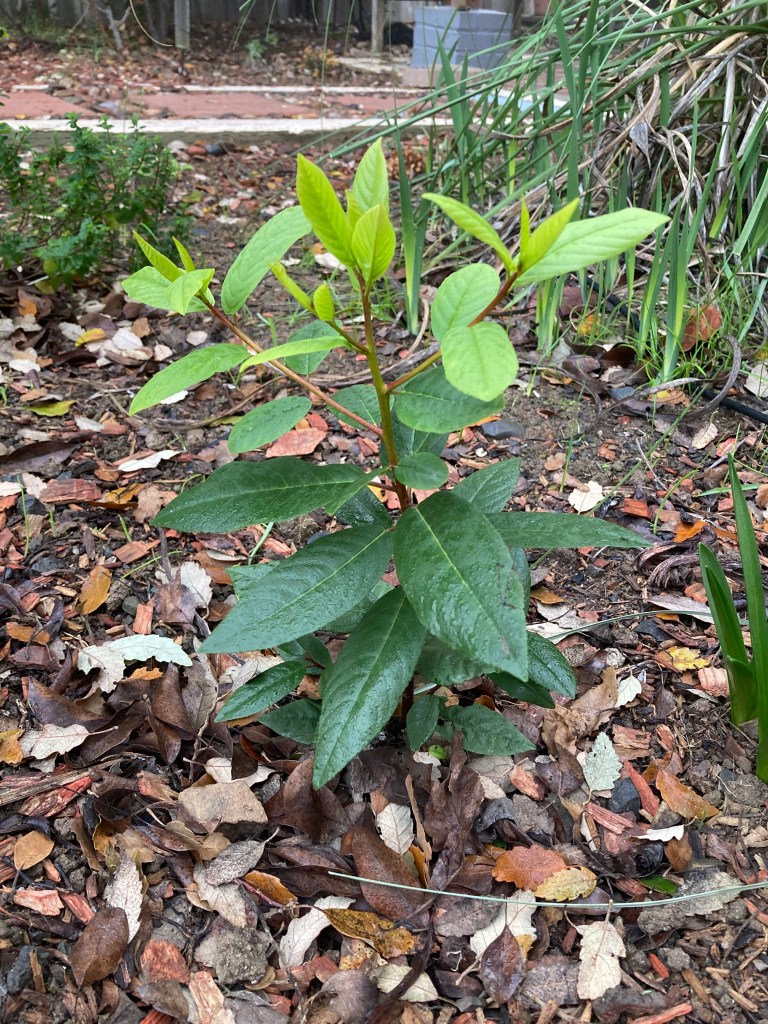
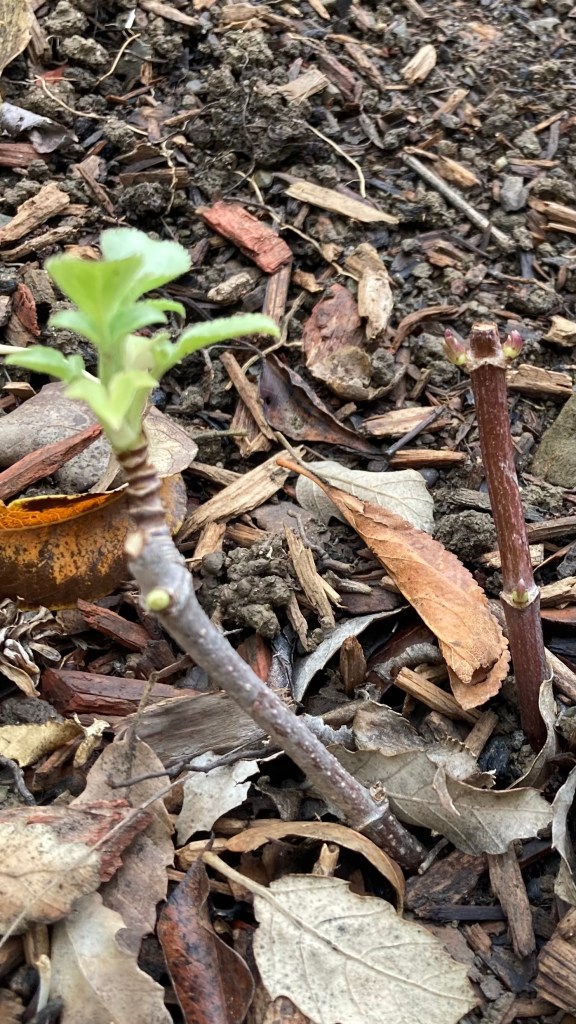
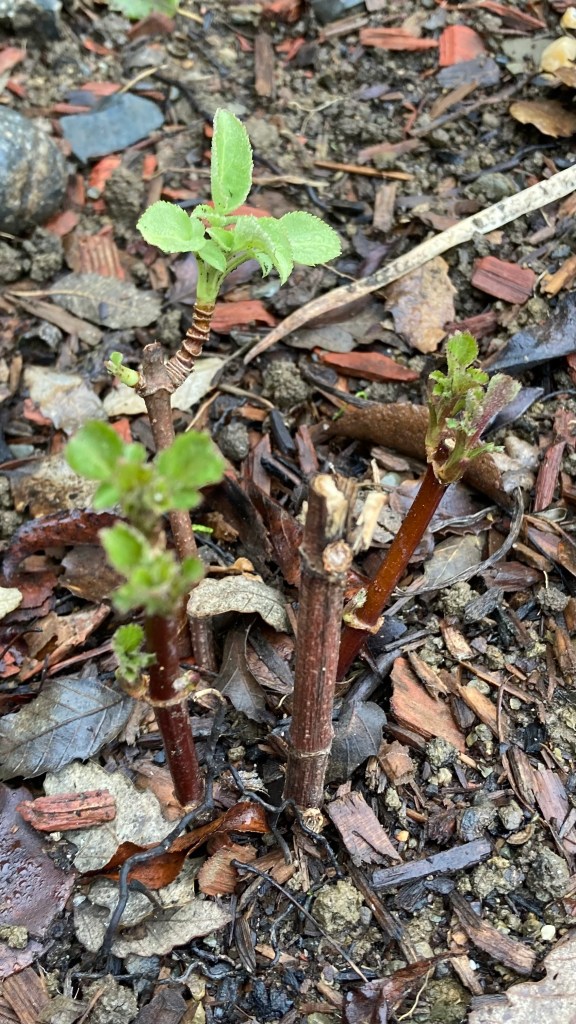
The Blue Elderberry (Sambucus mexicana) has been growing slowly, but surely after coppicing in the fall. I’m so glad I took multiple pictures so I could compare!

That’s the big update for now. I hope wherever you are in the world that you are seeing signs of beauty outside!

 Putting Down Roots
Leave a comment