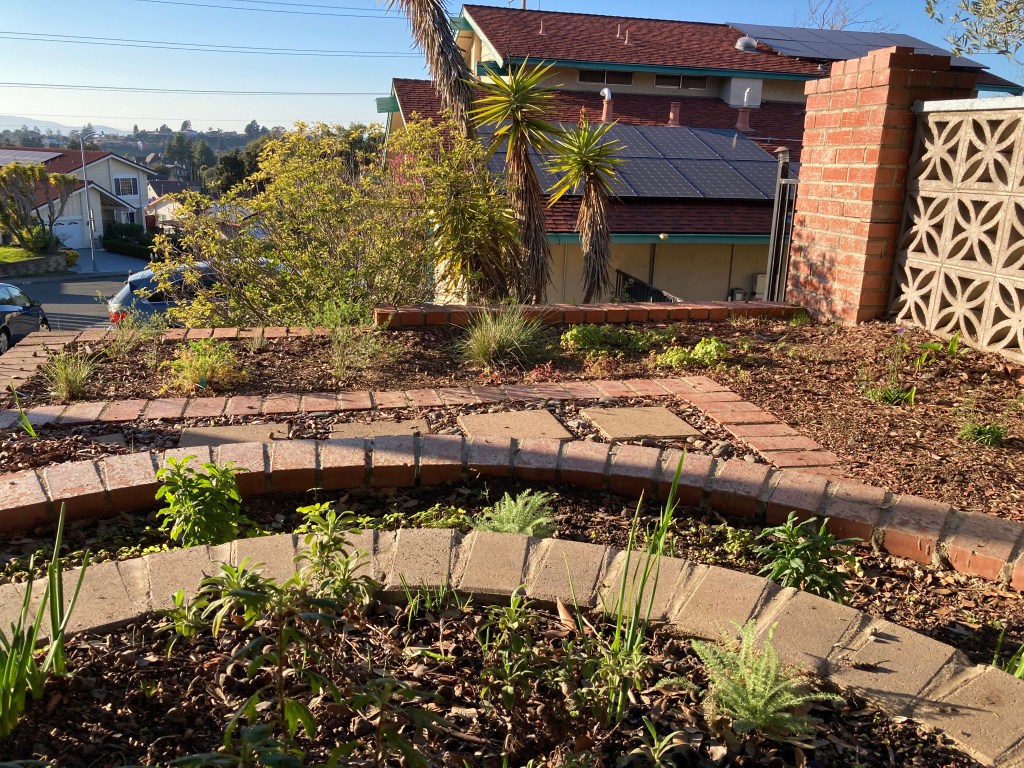
There hasn’t been much to report the last week with this native plant journey. It’s been raining a lot (yay – happy plants!!!!), so I haven’t spent as much time outside.
Everything is still budding and growing, but none of the native plants are flowering quite yet. (I hope that will change next year since I’ve made a point of planting a few winter-flowering species!)
So, while I wait for the latest storm to pass through (it’s currently pouring outside!), I thought I’d share some plans for different parts of the yard.
1. Removing non-natives from a backyard bed
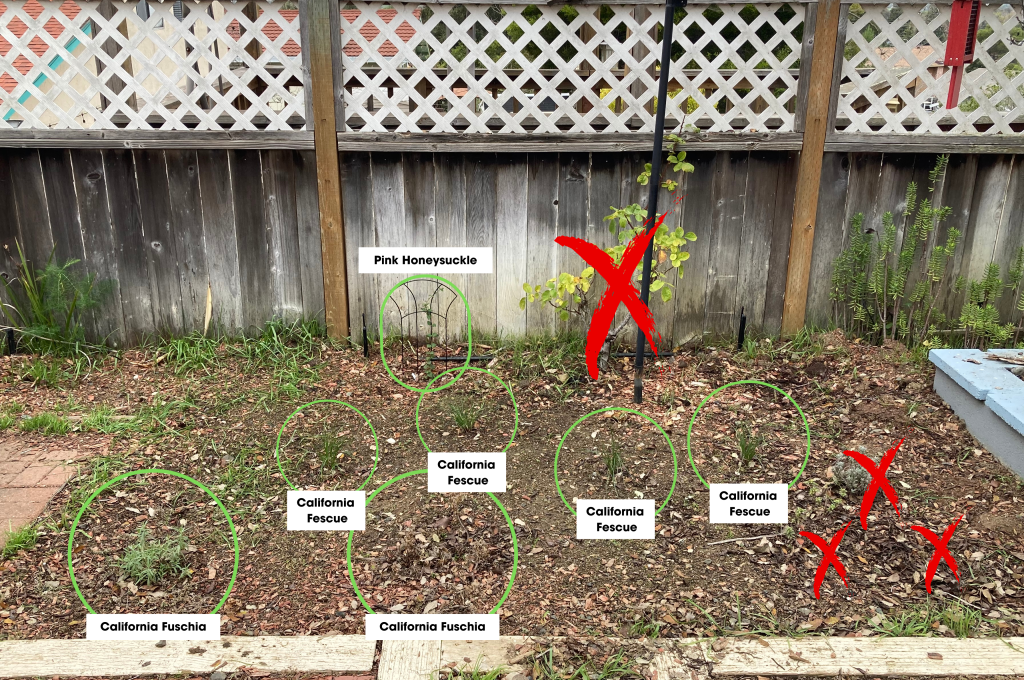
This bed is in the backyard, which faces north. In that blue raised area to the right is a large plum tree. In the spring and summer, this bed gets sun pretty much all day. But, right now with the sun lower in the sky, the house blocks the light during the main part of the day, so this bed really only gets morning and late afternoon sun. I keep promising the plants that the sun will return soon!
This bed used to contain all non-native rose bushes, none of which were particularly healthy. There is still one rose bush against the fence (where the big red X is in the photo) that I need to remove. And the three smaller Xs are non-natives I put in before I learned how important native plants are to restoring California’s ecosystems. I want to remove those as well (lavender, bat-faced cuphea, and a non-native coreopsis) so they’re not competing for nutrients with the native plants. I’ll put some flowering native plants there instead.
There are native wildflower seedlings popping up between all the plants, though none are really thriving. I’m waiting to see if any of them make it before popping in older wildflower plants. But I was thinking this might be a good spot for yarrow and milkweed. Any suggestions?
Last week, I started volunteering at my local native plant society nursery and I learned from one of the other volunteers that White-crowned Sparrows like to eat seedlings, especially California Poppies and lupines. We have many White-crowned Sparrows in the yard, so the mystery of the chewed sprouts has been solved!
The red thing hanging down in the top right part of the photo is a suet bird feeder, which the Chestnut-backed Chickadees and woodpeckers LOVE. The plum tree branches are usually full of many kinds of birds. They like to sit there before swooping down to visit that suet feeder and a seed feeder located about 20 feet east from the tree. But I’m wondering if I should move the feeders. I hope this bed will be visited by many pollinators and I don’t want to create an all-you-can-eat butterfly buffet for the birds!
2. Putting in shade-tolerant plants to fill in gaps
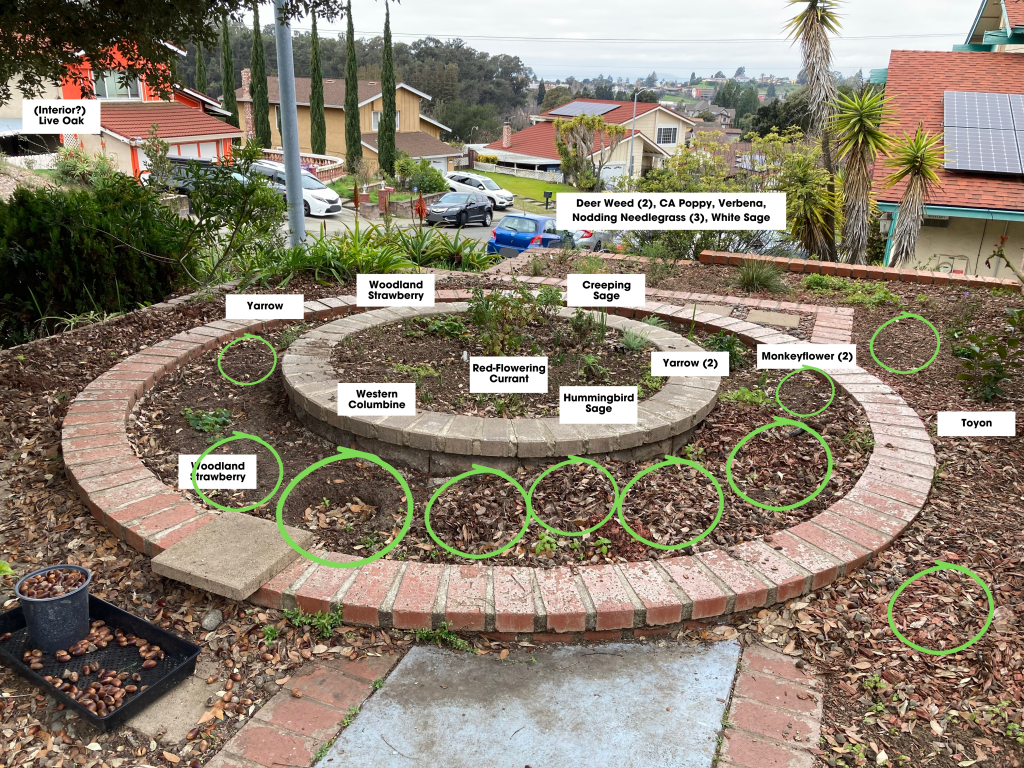
You may recognize the beds in this photo from previous posts (like this one). The circular beds are beneath a large and beautiful oak tree (thus, all the leaf litter and acorns in the photo), but do get morning and late afternoon sun. The bed at the edge of the yard, behind the circular ones, isn’t shaded by the oak tree except in the late morning, so those plants get a lot more sun.
This entire area of the front yard is very windy and dry, due to winds coming up the hill from the Carquinez Strait (way off in the background of the photo). Those winds keep this land a lot cooler in the summer than surrounding areas and towns, which is wonderful. But the plants need to be pretty wind tolerant to survive.
I’m happy with the progress in this part of the yard. When we moved in, there was nothing in that back bed and all sickly rose bushes in the circular beds. Now, there are a lot of young native plants in place in their first or second year of growth.
But all those circled areas in the photo are places where I can and should put more native plants before anything non-native and invasive starts to grow. As with the backyard bed, there are tons of native wildflower seedlings between all the plants. These seedlings are a lot stronger and taller than the backyard ones, especially the Elegant Clarkia, so I’m excited to start seeing flowers in the next few months!
I’m on the hunt for partial to mostly shade-tolerant (and wind-tolerant) native plants to put in this area. Maybe a trip to my favorite native plant nursery (Watershed Nursery in Richmond, CA) is in my near future!
Whether you’re currently planning your garden on paper due to snow and frigid temps, or reveling in tropical mid-winter blooms where it’s sunny and warm, I’d love to hear in the comments what you’re up to with your planting plans!
I’ll cover more upcoming projects in my next post – stay tuned.

 Putting Down Roots
Leave a comment