
Hello, friends! It’s a chilly morning here in Northern California. I’ve got a warm cat on my lap, another one curled up next to me, and hot coffee in my favorite mug. Time for a (mostly) native plant project update!
One
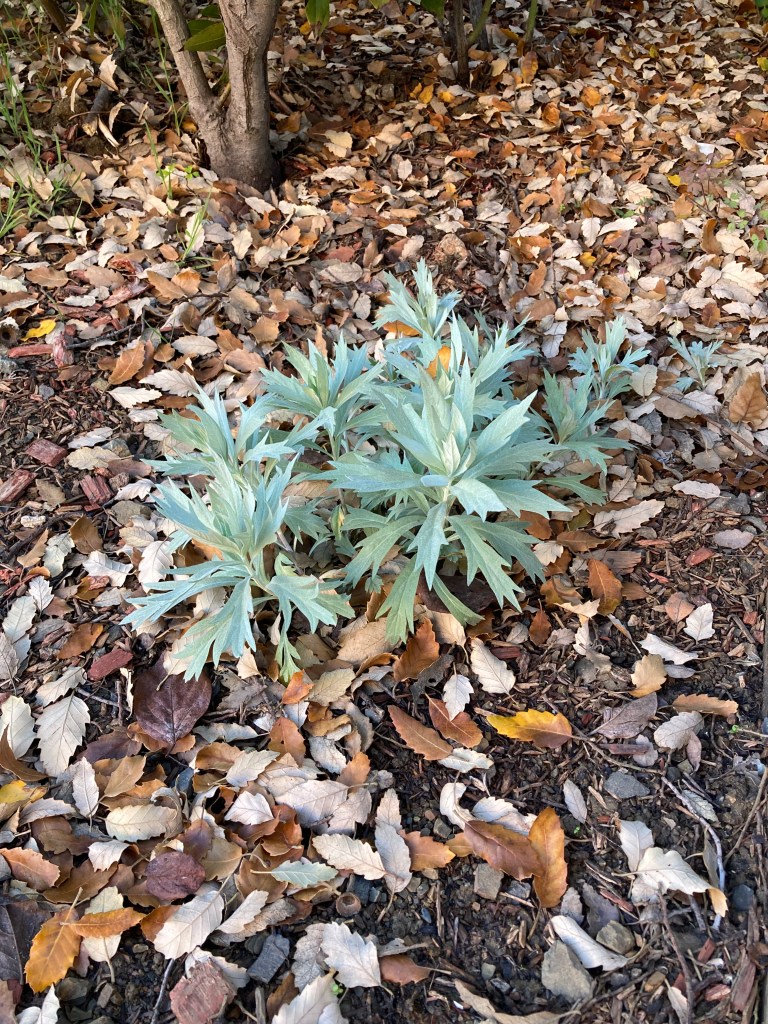
This is Mugwort (Artemisia douglasiana) or Keti (Patwin name), a wonderful plant that Indigenous peoples use as medicine and that is mostly found in moist areas. Except that I didn’t know that when I got it and planted it in one of the driest and sunniest parts of the yard (doh!), where it understandably struggled. (See my post about that lesson learned.) Last year, I moved “Muggie” (does anyone else name their plants and address them that way?) to a shadier, wetter spot right next to a faucet and a birdbath in the backyard. I rinse out the birdbath every day by spraying it with the jet setting on the hose wand, so the water goes all over this spot, and then I let the hose drain out here, too. Muggie is so much happier! He’s been sprouting new plants like crazy, and I’m hoping he’ll produce flowers this year.
Two
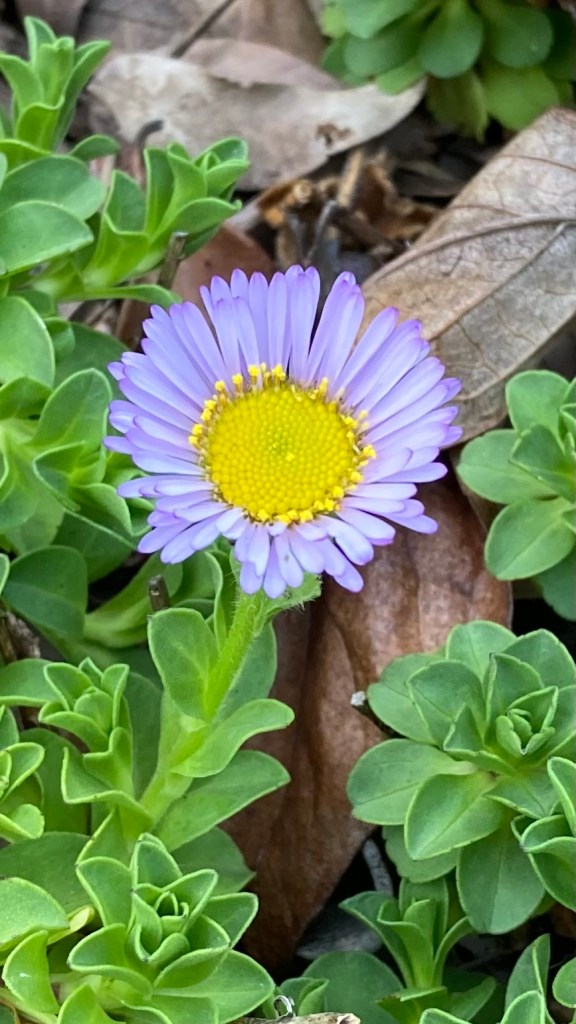
Say hello to the latest plant to bloom in the yard: Seaside Daisy (Erigeron glaucus). I live fairly close to the Napa River and San Pablo Bay, so we must be getting enough sea air to make this plant happy because it’s done really well in the front yard. I’m partial to it because of the purple and yellow color combination. I bought it from Mostly Native Nursery on one of my many trips to beloved Point Reyes National Seashore.
Three
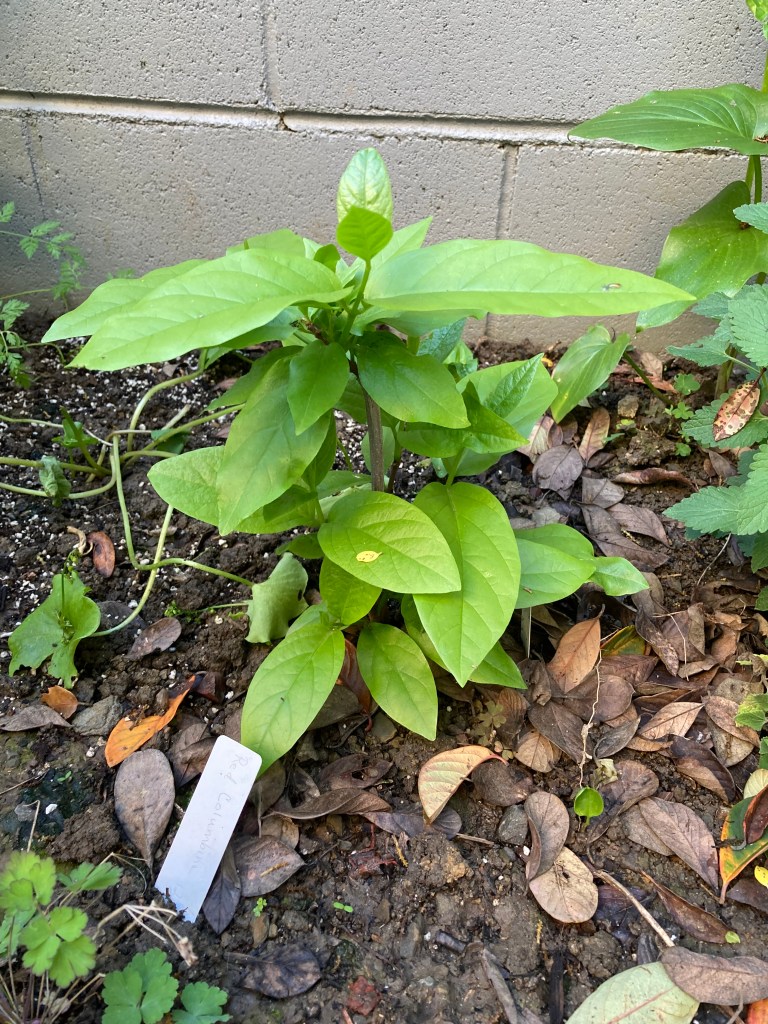
This Spicebush (Calycanthus occidentalis) gets a shout-out today for its resilience. A few months ago, it was just a stick. When I bought it, it had a few leaves, but they quickly fell off after I put it in the ground. So I was pretty sure I had killed the poor thing. But once the rainy season started, little green buds began to appear. And look at him now! It’s amazing how much it warms my heart to see native plants thriving on this little piece of land I tend.
Four
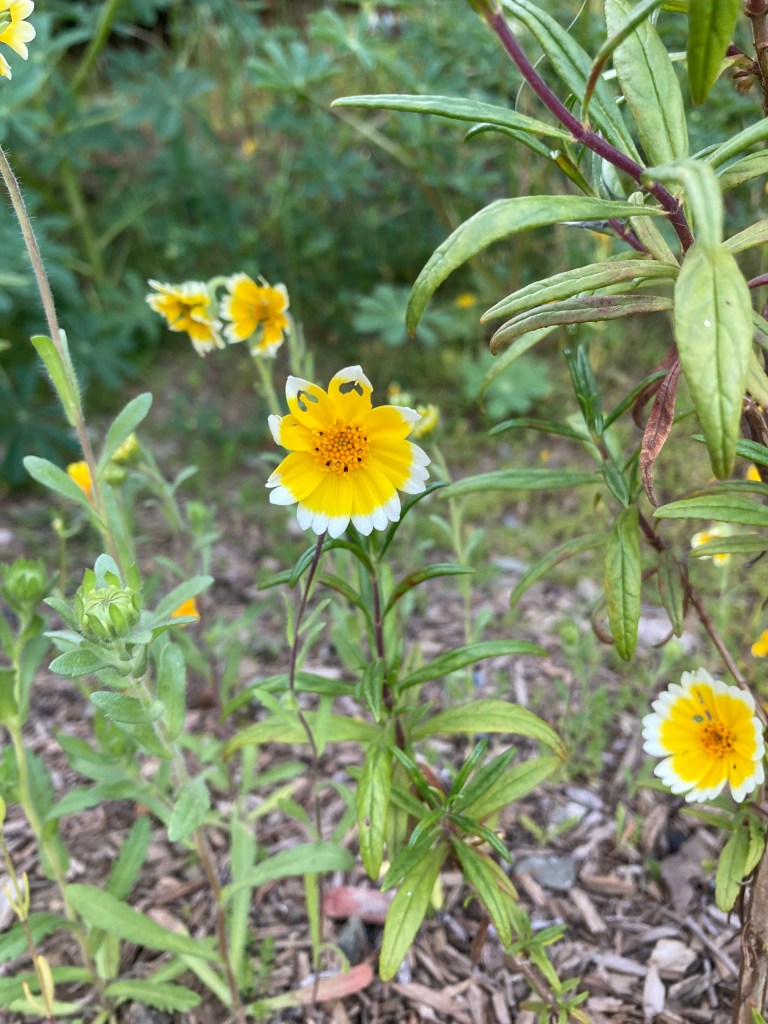
The Tidy Tips (Layia platyglossa) that I sowed from seed last fall made their first blooming appearance this week, which I quickly celebrated on Bluesky. This morning, I noticed that someone has been munching on their pretty petals in a cool pattern. Don’t the chew holes look a bit like upside down hearts? Nature is fascinating!
Five
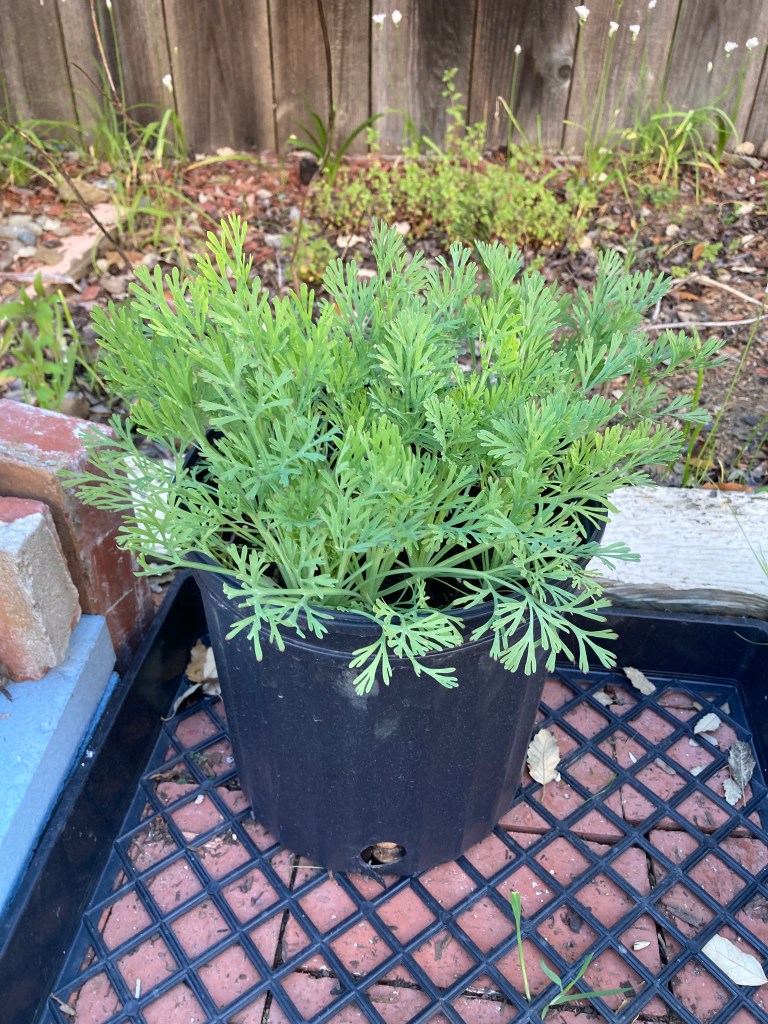
Back in January, I noted how pretty much all of the California Poppy (Eschscholzia californica) seedlings in the yard had been scarfed down by birds. (A friend at the native plant nursery where I volunteer told me it was likely the White Crowned Sparrows.) It’s really frustrating to not be able to successfully grow this iconic California wildflower, especially when I see them growing in every possible inhospitable location nearby–the side of the highway, on train tracks, behind a dumpster in a parking lot, etc.
So I decided to try again and grow the seeds in a container. That way, I could keep the baby seedlings covered, move the pot around to better spots in the yard, and generally keep an eye on the goings-on. (Did I run outside to gently scold a White Crowned Sparrow when I spied it heading toward the seedlings from my living room window? Yes, yes I did.) But my idea worked (knock on wood), and now I have a pot filled with happy poppy plants. I won’t scale back the vigilance, though, until those bright orange flowers grace me with their presence.
Six
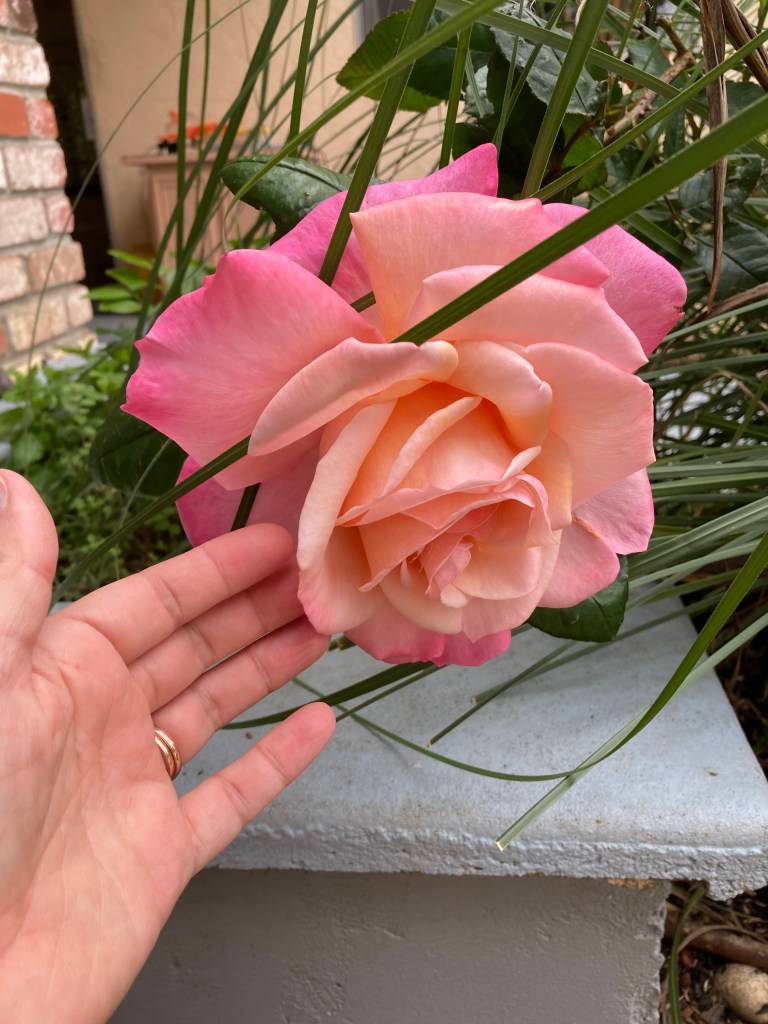
For number six this week, I’m straying outside my native plants world to show you this absolutely ridiculously huge rose that bloomed in the backyard. There are still a handful of non-native rosebushes that I haven’t removed yet, and I’m pretty sure this one is trying to dazzle me with its flowers in an attempt to save itself. Even with my hand in the photo, it’s hard to really gauge the true size of this thing. It’s as big as a dinner plate! I have no idea what type of rose it is, but it sure is beautiful! (And, don’t worry my rose friend, my shovel is at rest for now.)
That’s it for this week!
Be sure to check out:
The Native Species Activity Book from the Yocha Dehe Wintun Nation – this is where I found the Patwin name for Mugwort. The Yocha Dehe Wintun Nation are Patwin people and the Indigenous nation whose unceded land I reside upon in Solano County. This page has several great resources for kids to learn some Patwin words and a bit of Patwin cultural practices.
Whenever I mention planting native seeds on my blog, I’ve purchased the seeds from Walqaqsh California native seeds store. This is the online storefront for Nicholas Hummingbird (find him on Instagram @california_native_plants), whose classes on native plants have taught me so much and literally changed my life. He harvests the seeds himself, and I have had amazing success with germinating them. Also, his prices are much lower than other seed suppliers, and right now he’s having a big sale just so more people can put native seeds in the ground. Support an Indigenous business and a passionate California native plant teacher!
Finally, be sure to read the other Six on Saturday posts! Go to Garden Ruminations’ post and find the other participants’ links in the comments.
Hope you are all having a lovely weekend!
–Kristen


 Putting Down Roots
Leave a comment