For me, planting native plants is about healing the land and restoring some of the natural biodiversity that was here before settlers came and destroyed pretty much everything in their path.
Part of that means that more birds, insects, and other animals will find food, nesting material, and shelter on this little piece of land I care for.
Thanks to the blessing of two big native oak trees, we already get to see and hear a lot of different birds visiting the yard. My husband and I had the thrill of our lives a couple weeks ago when a Great Horned Owl was perched in the backyard oak, hooting repeatedly and staring at us as we watched from the kitchen window.
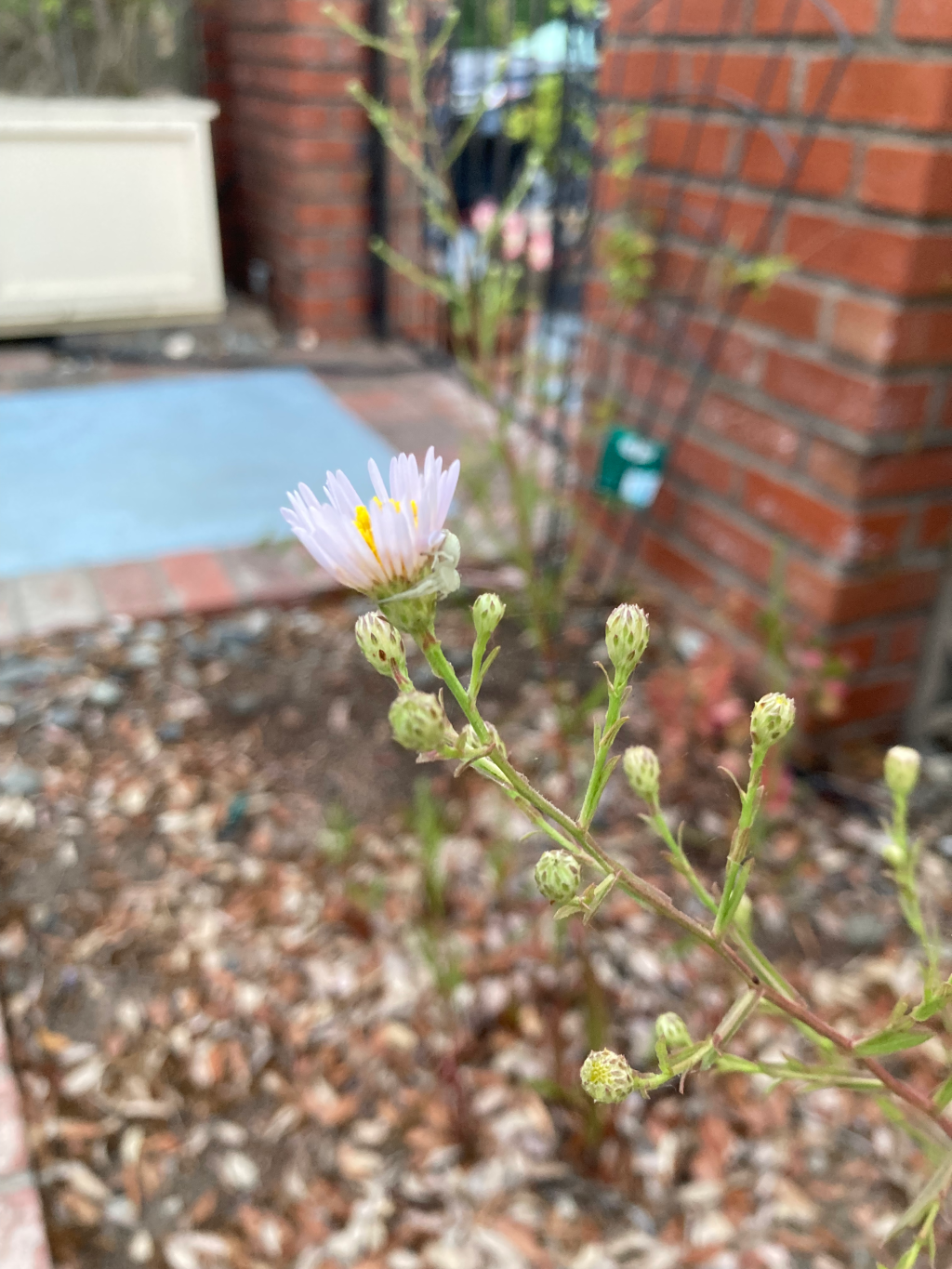
But I’m starting to notice a lot more insects lately–all different native bees, pollinator flies, spiders, and beetles. One morning, I noticed a white spider clinging to the base of a California Aster flower bud.
He/she stayed there for days and days.

My iPhone identified it as a Flower Crab Spider, also called the Goldenrod Crab Spider because it likes to hang out on goldenrod and milkweed. And apparently asters! They’re called crab spiders because they can walk sideways like a crab. I’d never seen a white spider or a crab spider before, so it was kind of exciting!
From observing him over a few weeks, I noticed that once the aster petals turned more white than lavender, little Crabby moved around more from flower to flower. He always seemed to position himself at the base of the flower, with two of his white legs pointed up but camouflaged among the white petals.
And then one morning, I saw him enjoying the fruits of his labors.
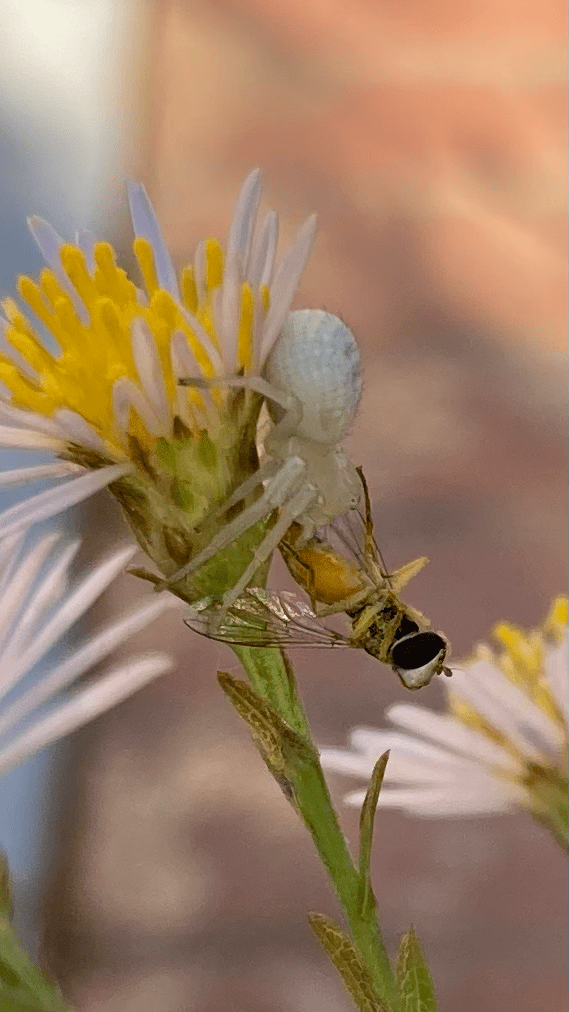
He snagged a native hover fly (possibly a Margined Calligrapher Fly), who must have landed on the aster to gather nectar!
Even though my photo is a little grainy close up, you can see the hover fly’s beautiful iridescent wings and the tiny hairs on the spider’s body.
How amazing is it that this spider has adapted to using the native flowers to hide itself and then set traps for its prey when they come to land on the flower?
I just love that this kind of natural circle of life type of thing is happening on and around – and because of – the native plants I’m tending. And that I’m learning to take the time to observe them.
What have you found fascinating in nature this week?


 Putting Down Roots
Leave a comment