It’s been hard to write lately. There’s been so much terrifying, disturbing, and angering news that it feels overwhelming. Which I know is the intent of those in power. Each time I start to feel hopeless or unsure of what to do, I head outside. (Or I bake something – like pumpkin snickerdoodles.)
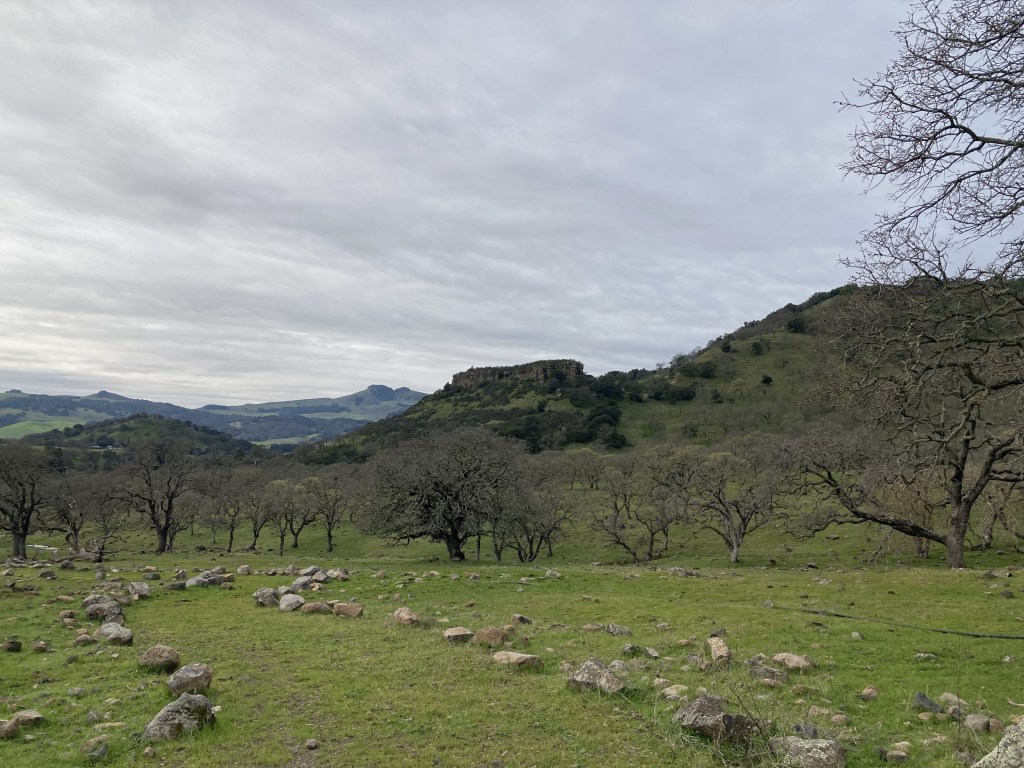
On Sunday, Rob and I went to explore the nearby Patwino Worrtla Kodoi Dihi Open Space Park, which opened late last summer. The name means “Southern Rock Home of the Patwin People.” (Learn about the park in this article written by Anthony Roberts, the Yocha Dehe Wintun Nation’s tribal chairman.) It was absolutely beautiful and so quiet, with gorgeous hiking trails, native plants in abundance (like blue oaks and manzanitas), lots of birds, and happy cows grazing on lush green hills. (I literally squeeed out loud when we came upon a patch of sagebrush bushes!) Plus, there were trail signs teaching words from the Patwin language. It was the soul reset I needed, and I kept silently thanking the Patwin people for sharing their land in this way.


Later in the week, at home, I planted some lettuce seeds and California poppy seeds that I picked up from the free seed share at our local library. Rob and I are hoping to grow more of our own food as a small form of economic protest. (More on that and how it fits into my native plant goals in my next post.)
But yesterday, even this native plant project was adding to my hopelessness. I wasn’t feeling very confident in my plans or progress. I kept seeing photos on social media from other California native plant enthusiasts of their beautiful, happy plants in bloom. Many are plants that I’ve planted, too, but without the jaw-dropping results.
I know that the natives I’ve planted are still very young and not well established yet. I reminded myself that this is a long journey. But I was still having a “What the heck am I doing? I’m terrible at this!” moment.
Then, I listened to the plants instead of the thoughts in my head.
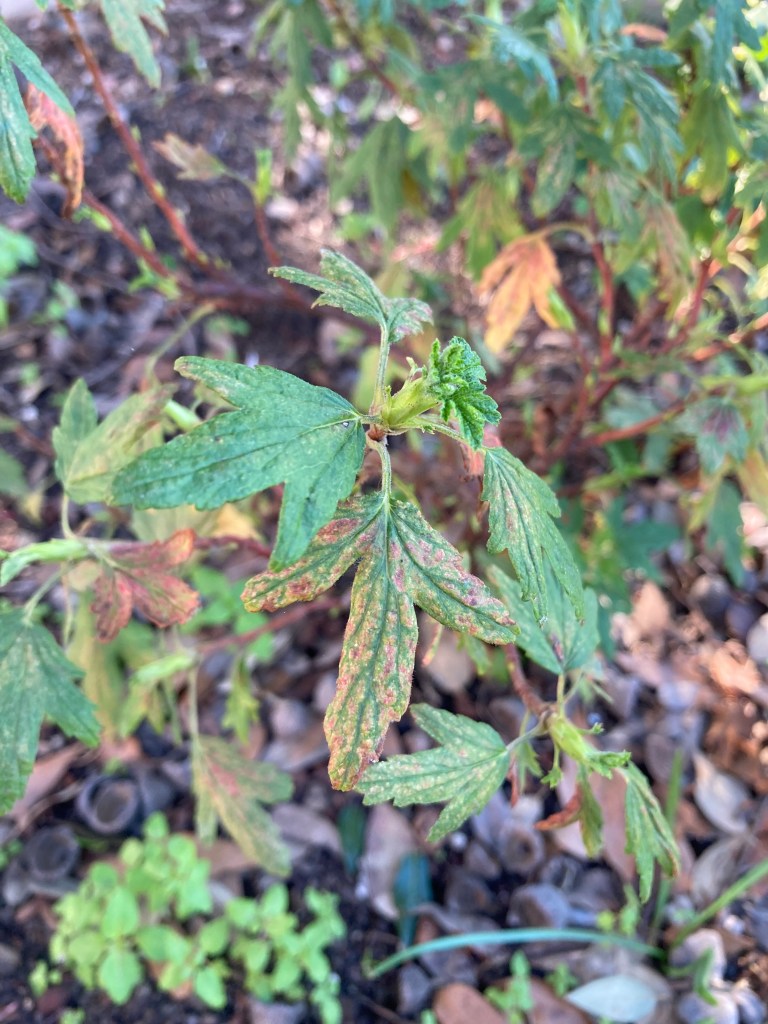
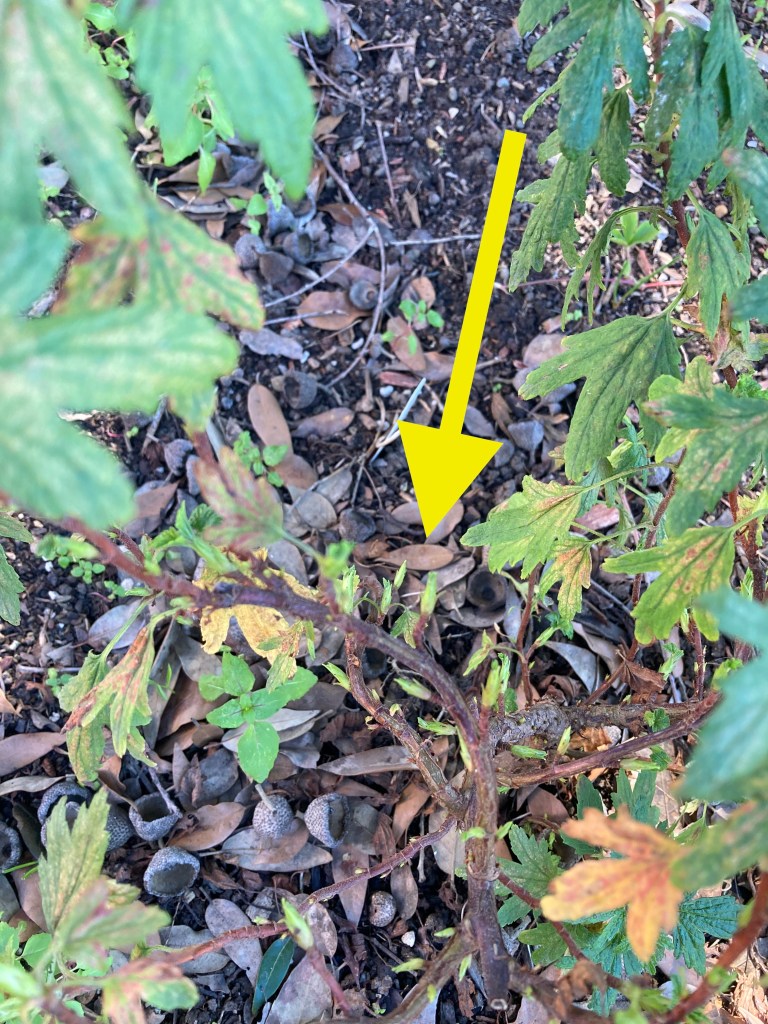
Yes, the Red Flowering Currant isn’t flowering yet and maybe won’t this year. It looks a little scrawny and some of its leaves are turning reddish brown. But look at all the green buds on the stems! And, there’s new growth at the end of every stalk. Imagine how lush it might be when all of those leaves and stems push out and unfurl!
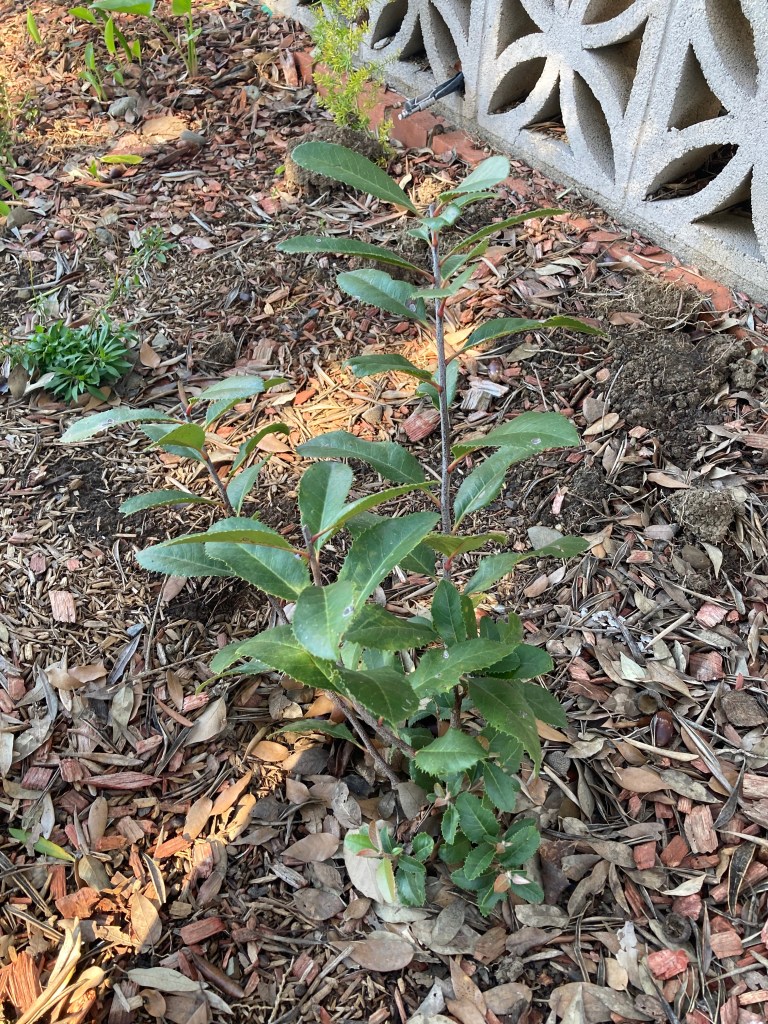
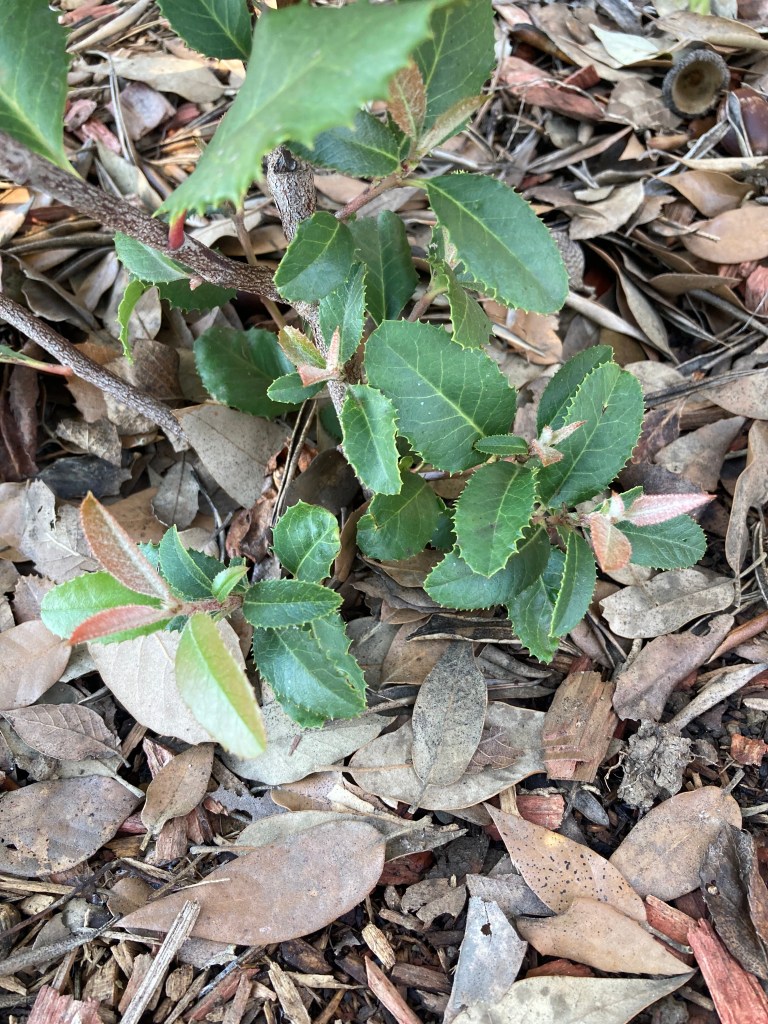
And, the Toyon didn’t flower or produce berries last year. It’s growing a little bit crooked instead of straight up. Maybe it should be in a spot that gets a little more sun. But it’s twice the size of when we got it, and there are new shoots near the base!
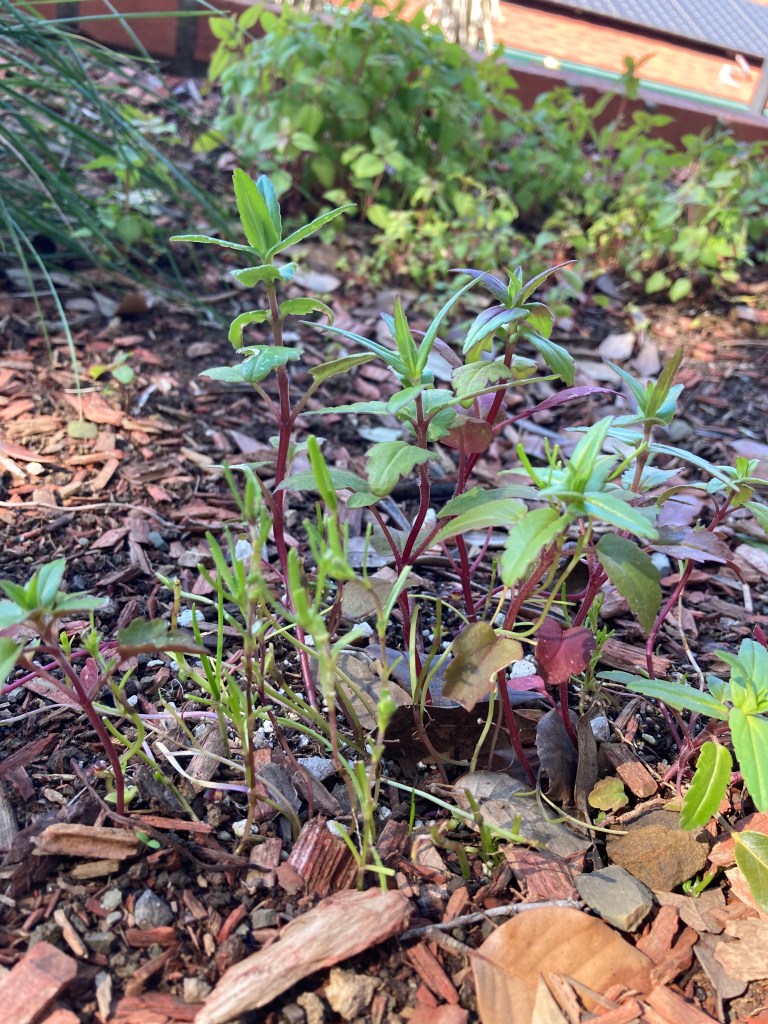
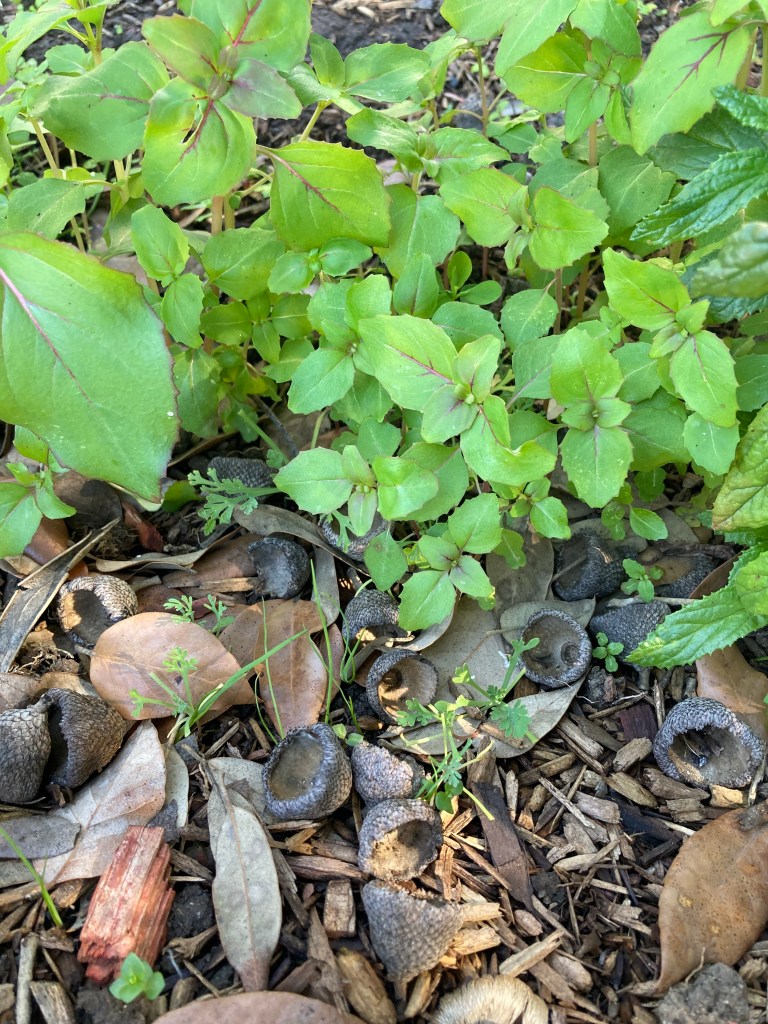
The birds ate a lot of the wildflower seedlings I planted, especially the California Poppies and California Goldfields. But yesterday I noticed that a lot of the Goldfields have new growth on their sad little chewed stalks. And, I found poppy seedlings growing underneath the protection of some Elegant Clarkia sprouts. The birds never found them under there!

As I was weeding on a crumbling slope in one corner of the yard, I realized that among the gazillions of weed sprouts were lots of healthy-looking California Goldfields seedlings. In the photo above, they are the ones with narrow leaves like grass blades, but thicker. Last year, only a handful of Goldfields grew in this spot. It looks like this year, I may have the beginnings of a wildflower meadow!
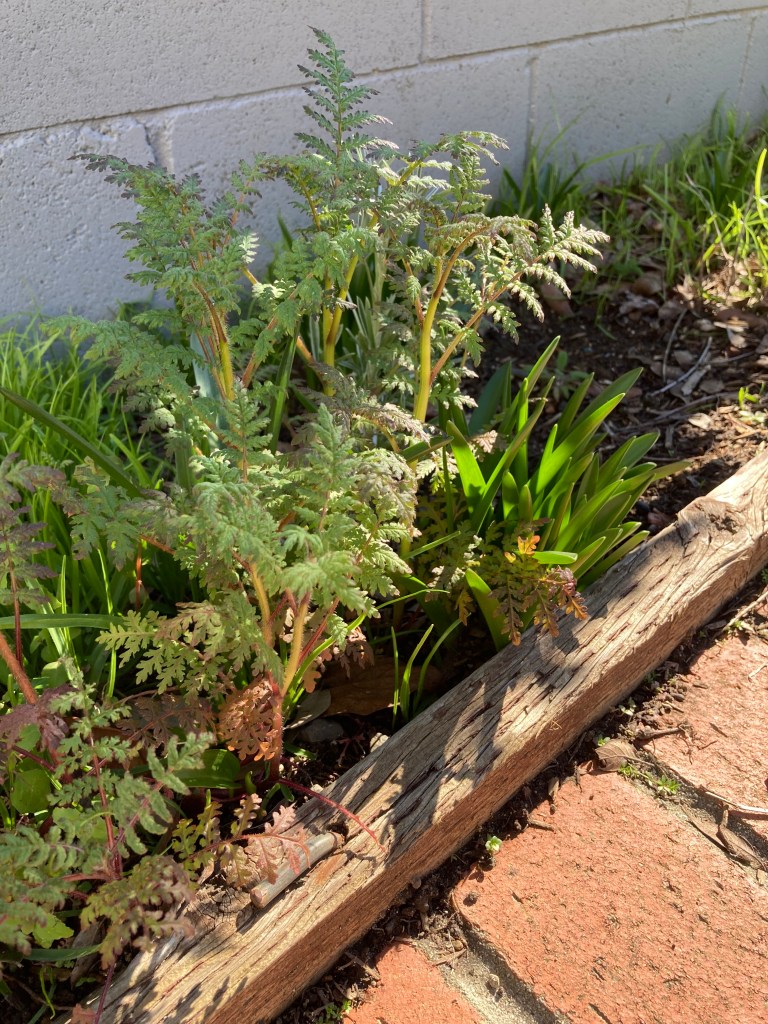
And, despite being surrounded by the leaves of non-native and some native bulbs, the Tansy-Leafed Phacelia seedlings shot up over the past few days. They are now towering over their neighbors. And here I was worried they would get choked out! I love their fern-like leaves.


Since moving to California, lupines have become one of my favorite plants. (Prior to my move, I didn’t give them much thought beyond remembering that they were mentioned a lot on Monty Python’s Flying Circus episodes. (See this clip for an example, but beware of some slightly salty language.) They are so resilient, popping up everywhere. There are probably 20 lupines currently growing in the cracks of our driveway, born of seeds from the one lupine I planted last year or from the ones growing in our neighbor’s yard. Look at how healthy and fat the stems look in the above right photo! And that is despite being surrounded by non-natives and aggressive weeds.
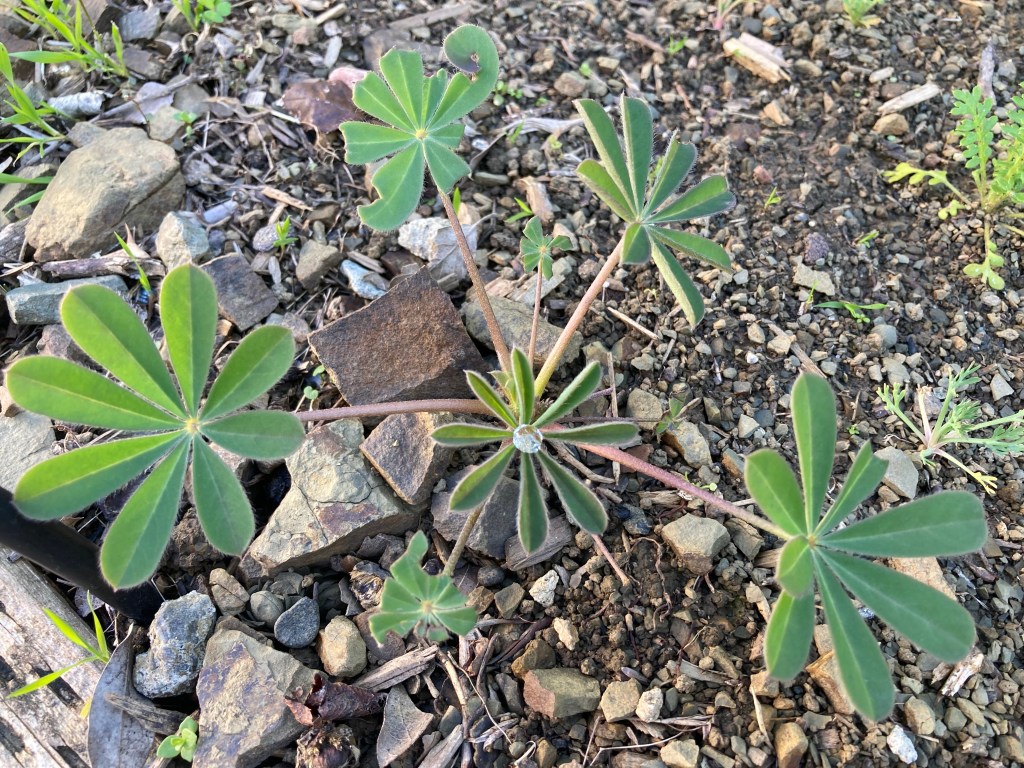
Finally, I came across this lupine. One small water droplet had collected in the center leaf cluster. Doesn’t it look like a diamond? What could be more beautiful than that?
All of these signs of growth and resilience made me realize that my efforts to grow native plants are making a difference, even if they may seem small or slow to me.
If you are feeling exhausted, hopeless, beaten-down, or shell-shocked right now, take a few moments to listen for what the natural world is telling you.
And, bake some cookies. That helps, too.


Leave a comment