My California native plant conversion project and I are in a bit of a holding pattern. I’ve been trying not to spend money except on absolute necessities, so new plants aren’t in the budget for a little while. At the same time, I’m still in “wait and see” mode with the plants and seedlings that are already in the ground. What will flourish? What will struggle? What will need to be moved to a different spot in the yard? So many unanswered questions!
Welcome to the first official bloom!
There is definite progress to get excited about, though — like the first lupine to bloom! This flower surprised me one morning. I never saw it starting to grow amongst the leaves, and then boom – there it was, beginning its beautiful show of purple.

I’m pretty sure it’s a Succulent Lupine (Lupinus succulentus) and that it came via seed from the neighbor’s yard. I was so excited to see the flower and the plant’s fat, healthy stems.
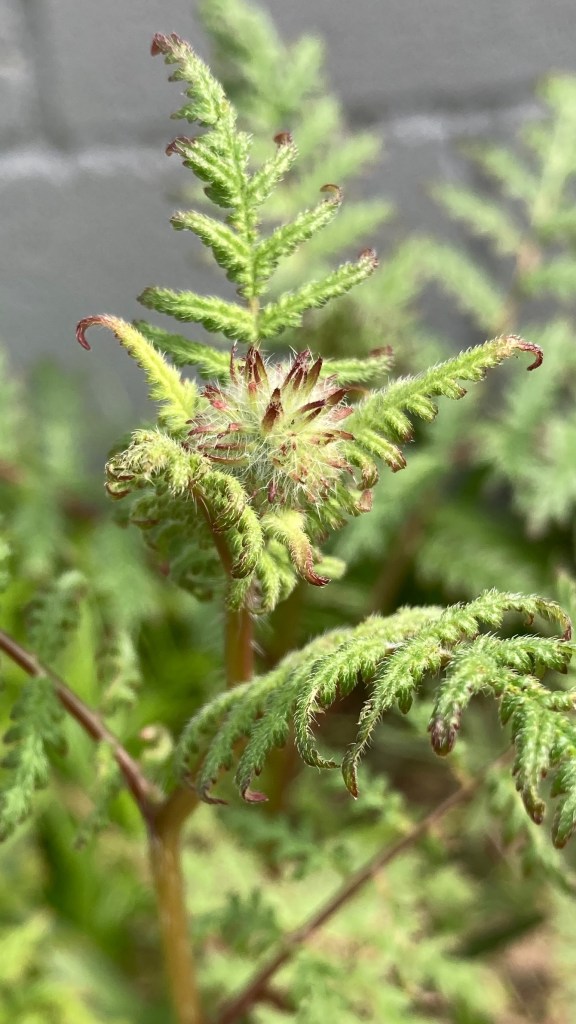
Delicate Phacelia features
The Lacy Phacelia (Phacelia tanacetifolia) plants are developing flowers, too (I think). That little fuzz ball with reddish tips in the bottom left photo wasn’t there before, so I’m assuming it’s going to turn into a cluster of flowers. I’m fascinated by the plant’s hairy stems, which apparently can be irritating to the skin. (Gotta remember to keep my gardening gloves on!) I’m also mesmerized by the colors — the green, fernlike leaves tipped in that maroonish color.

New shoots on the Snowberry
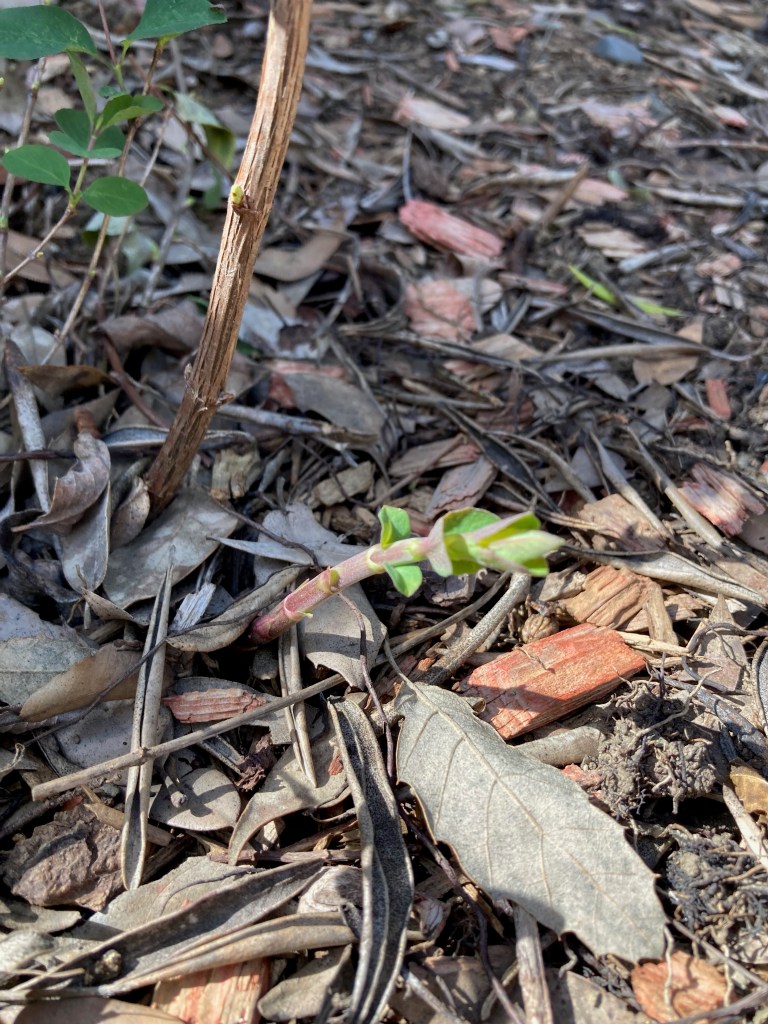
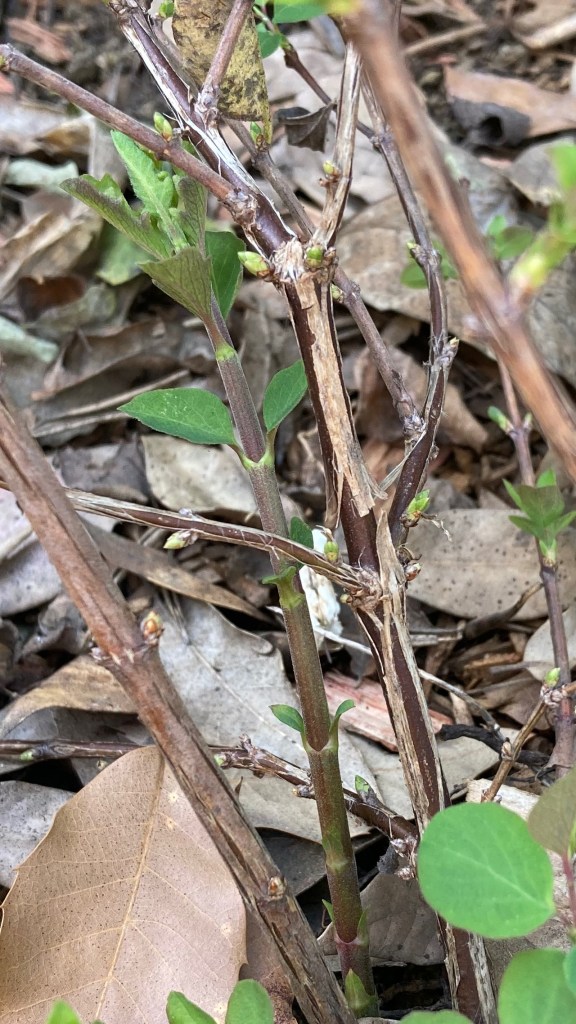
Signs of new growth and healthy shoots on the Common Snowberry (Symphoricarpos albus) made me giddy because it didn’t seem all that happy in the fall. It grew fewer than five berries last year, but things are looking up for this year. The berries are poisonous to humans, but the birds reportedly love them!
Too many seedlings?
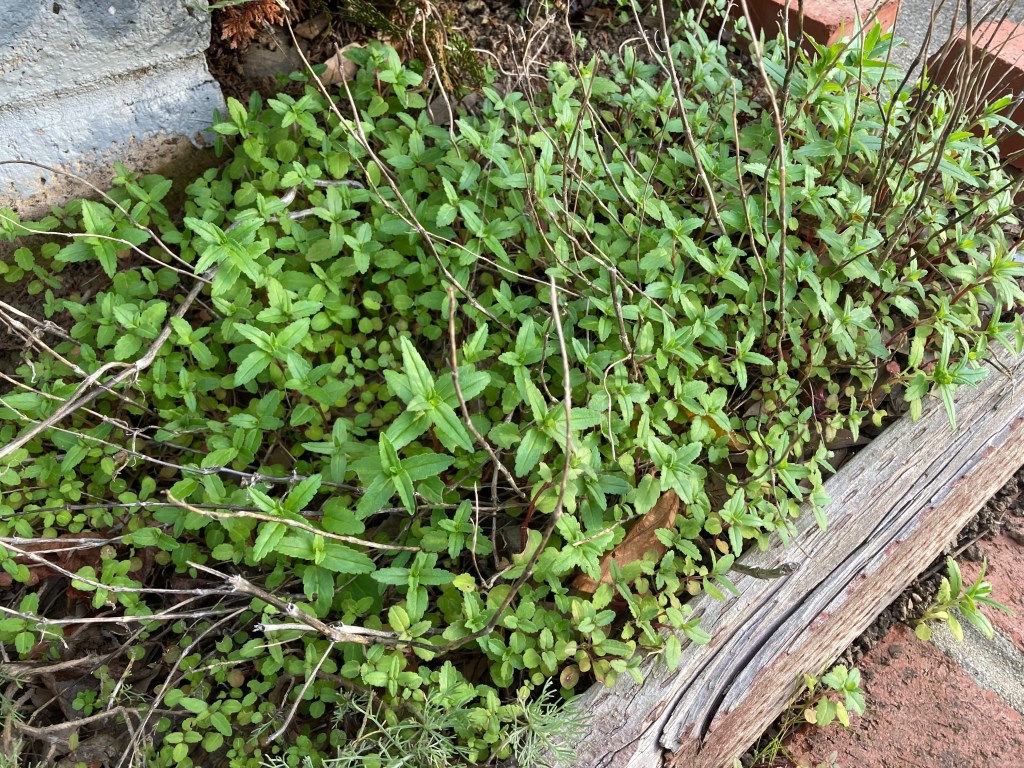
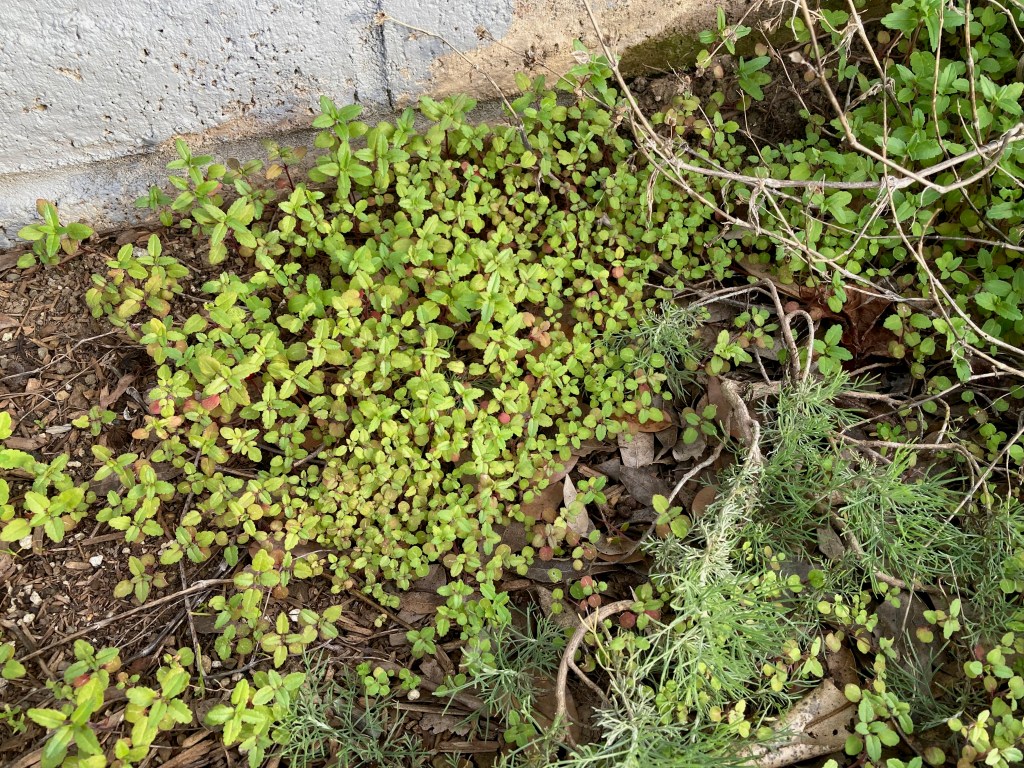
The Purple Innocence (Collinsia heterophylla) has gone bonkers, mostly from self-seeding from last year, but I may have sprinkled in some more seeds in the fall. Do I need to thin them out manually or do you think they’ll sort themselves out via survival of the fittest?
Fortress of seeditude
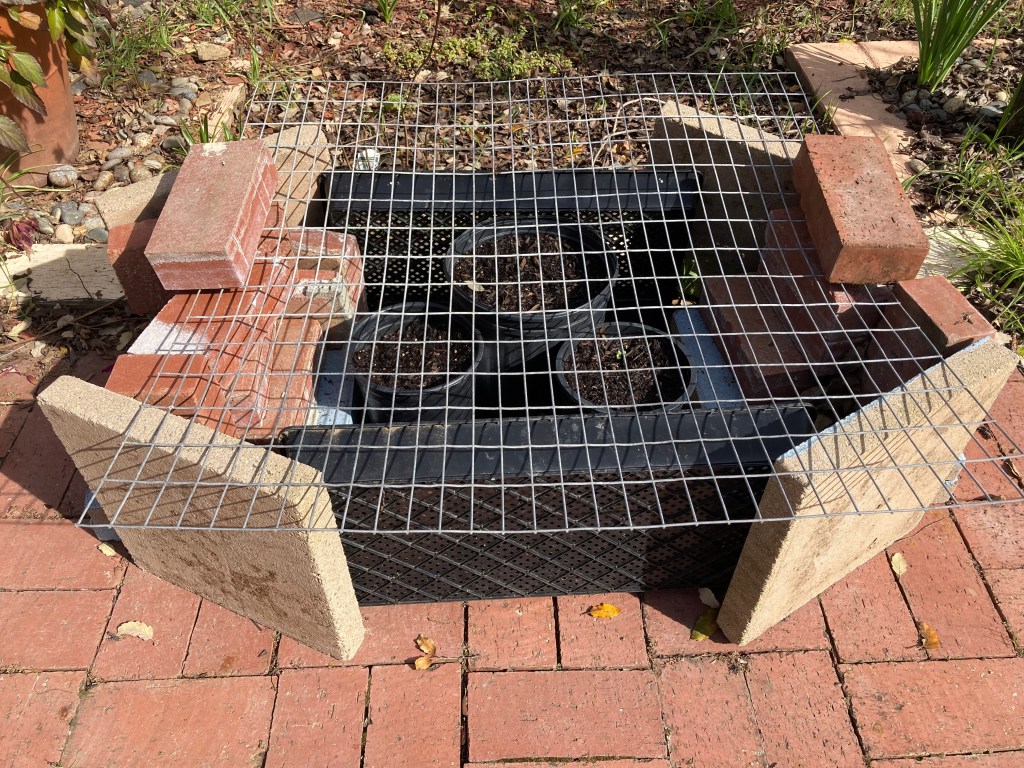
I had more California Poppy (Eschscholzia californica) seeds and two kinds of (non-native) lettuce seeds on hand, so I decided to get them going in pots. But the birds (especially the White-Crowned Sparrows) decimated most of the other poppy seedlings I planted in the fall, so I knew I needed to protect these little ones when/if they started coming up. I had to secure the metal mesh high enough away from the soil surface so that the birds couldn’t just stand on the mesh and poke their heads through to snag their tender treats. Check out my ridiculous “masterpiece” (monstrosity?) below. It’s definitely not pretty, but it’s doing the job. There are two tiny Bibb lettuce sproutlets in the small pot on the bottom right and lots of poppy sproutlets in the big pot at the back. Yay!

Beauty contained
I’ll leave you with one more small victory: The Fragrant Pitcher Sage (Lepechinia fragrans) has finally bloomed! The photo below was of the first bloom, but now there are several. I haven’t spotted any hummingbirds visiting the flowers yet, but hopefully that will happen soon. I have this plant in a large pot because it’s not technically native to my local area, even though it is native and endemic to California. (Another mistake on my part. Sigh.) So my plan is to make sure it doesn’t seed and spread. I’m actually interested to see if the local pollinators pay attention to it since it’s a Southern California native.

I have lots more ideas for new posts (e.g., what I’ve learned about growing native plants in containers, how much is native enough?, and new sources of inspiration and knowledge) and I just need to sit down and WRITE. Thanks for stopping by to visit! I hope you’ll come back–I’ll be posting more often soon.
Happy March!
–Kristen


 Putting Down Roots
Leave a reply to fieryboots Cancel reply