The house and yard I call home right now are at the top of a decent hill in Vallejo, California, a city bordered on one side by the meeting of the Napa River and the Carquinez Straits and adjacent to San Pablo Bay. We get nearly constant breezes/winds from the Bay coming up the hill.
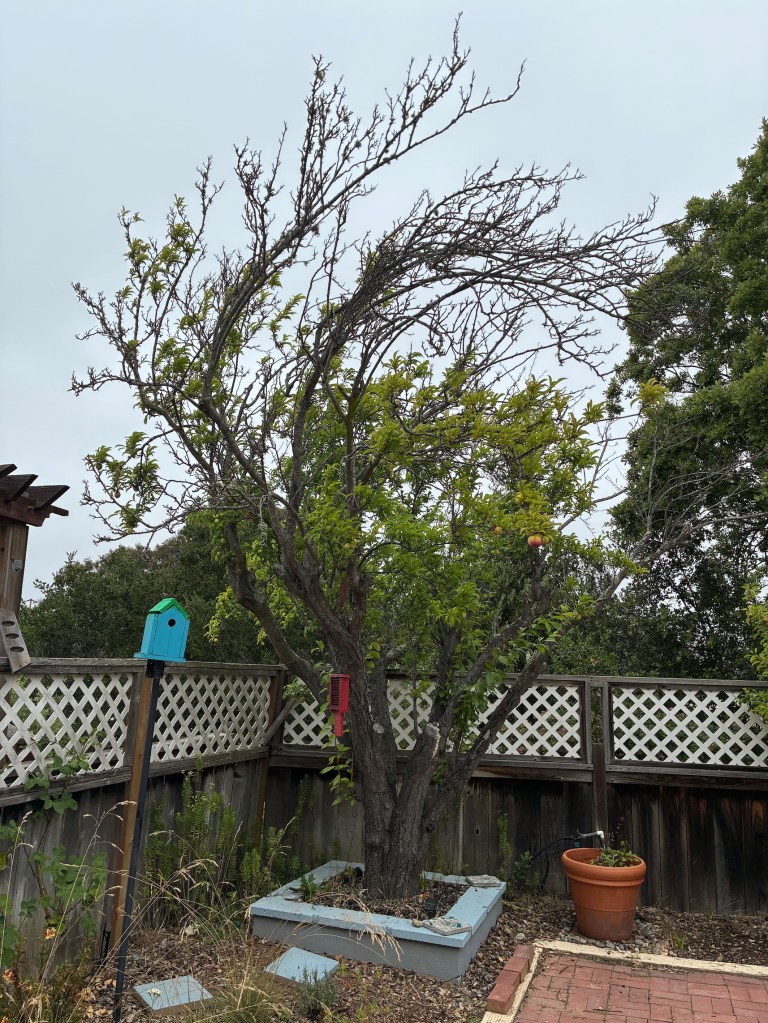
Those breezes keep things at least 10 degrees cooler in the hot months than the low-lying neighboring towns like Benicia and Napa, which is wonderful. But that wind also makes for pretty harsh conditions for the plants. Most of the bushes and smaller trees that were here when we moved in grow sideways, like the plum tree in the backyard below:
It’s so dry here. I can soak the soil heavily in the mornings, and within just a few hours, the ground is bone dry, cracked, and dusty again.
I often think about how the land must have been before it was developed. I’m pretty sure these were oak woodlands, so I imagine there were many oak trees helping to slow the wind and shelter the smaller plants and soil.
There are a few oak trees at the edges of the yard, but not located where they could protect the planting areas from the wind whipping up the hill.
I’m hoping to find some solution that will help a little. In the meantime, the plants do their best to hang on.
What I’m learning is that native plants, which for other people grow quickly and lushly, sputter and crawl in this yard.
Besides the wind, part of the problem could be that the soil is nearly devoid of nutrients. The previous occupant used plastic weed barrier sheets everywhere, starving and suffocating the soil beneath. I’ve pulled almost all of that up, but the soil is still recovering.
Whatever the reason, even the supposedly “easy to grow” natives tend to struggle here. I have the saddest-looking Blue Elderberry ever (it’s only about 6 inches tall after 3 years), scraggly and crunchy Sticky Monkeyflowers, Hummingbird Sage that never blooms, and sparse and leggy Coyote Mint.
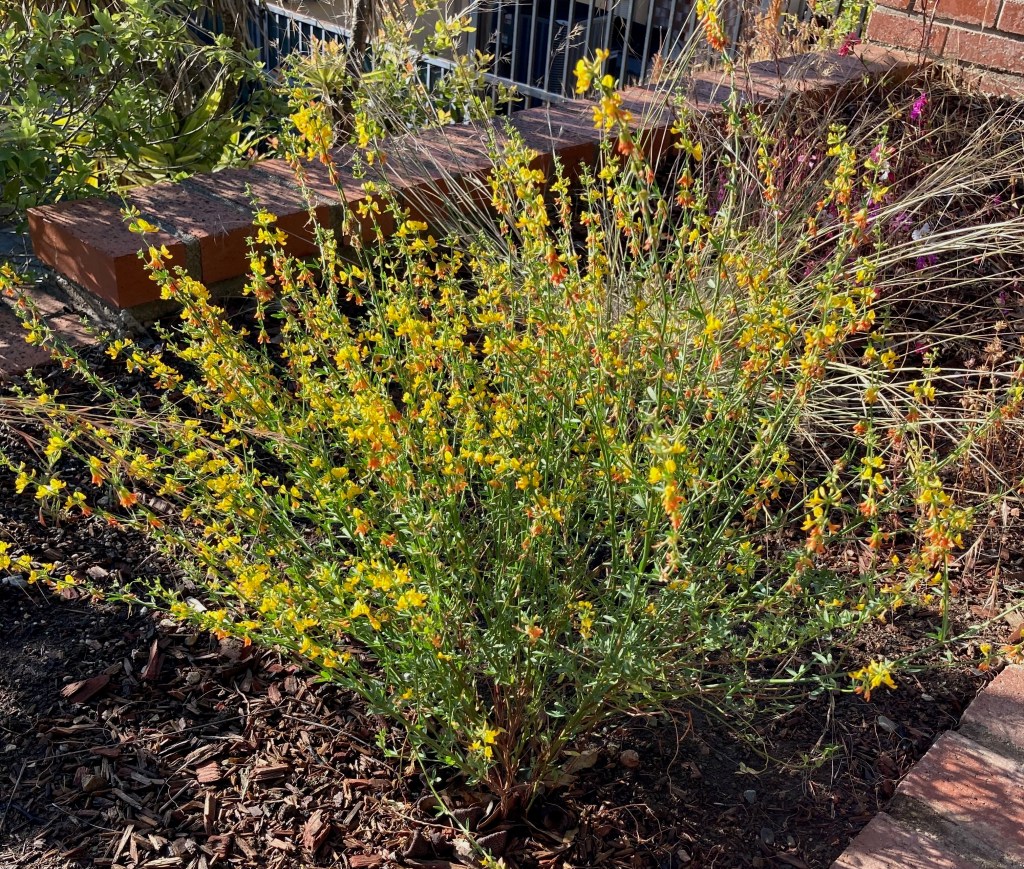
But there is one plant that has been a true hero in this yard: Deer Plant (Acmispon glaber).
I can’t remember how I first learned about Deer Plant, but I do remember reading that it’s used in many habitat restoration projects and helps fix nitrogen in the soil. That’s why I bought one plant a few years ago. It went right into the worst spot in the yard, where nothing had really grown before. (I had put a black sage there, and it died within 2 weeks. Even the Nodding Needlegrass was struggling in that spot.)
But the Deer Plant flourished. Since that first plant, which I now have to climb over because it’s gotten so huge and overtakes the pathway next to it, I’ve grown several more Deer Plants from seed (from Indigenous-owned Walqaqsh California native seeds). This spring, I put two gangly little sproutlets into the ground, and they are now beautiful flowering bushes that have completely filled in the garden bed along the front walkway to the house.
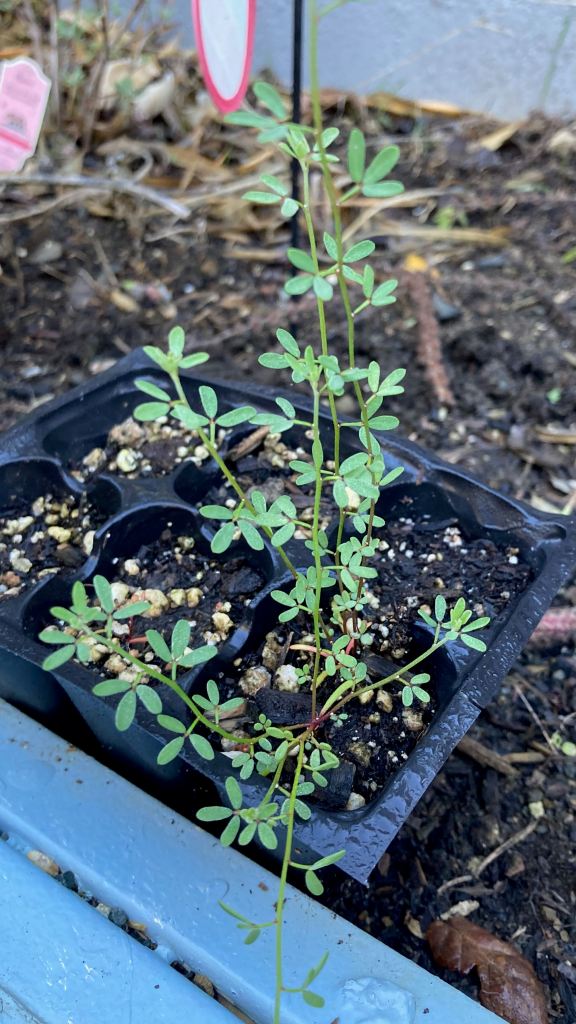
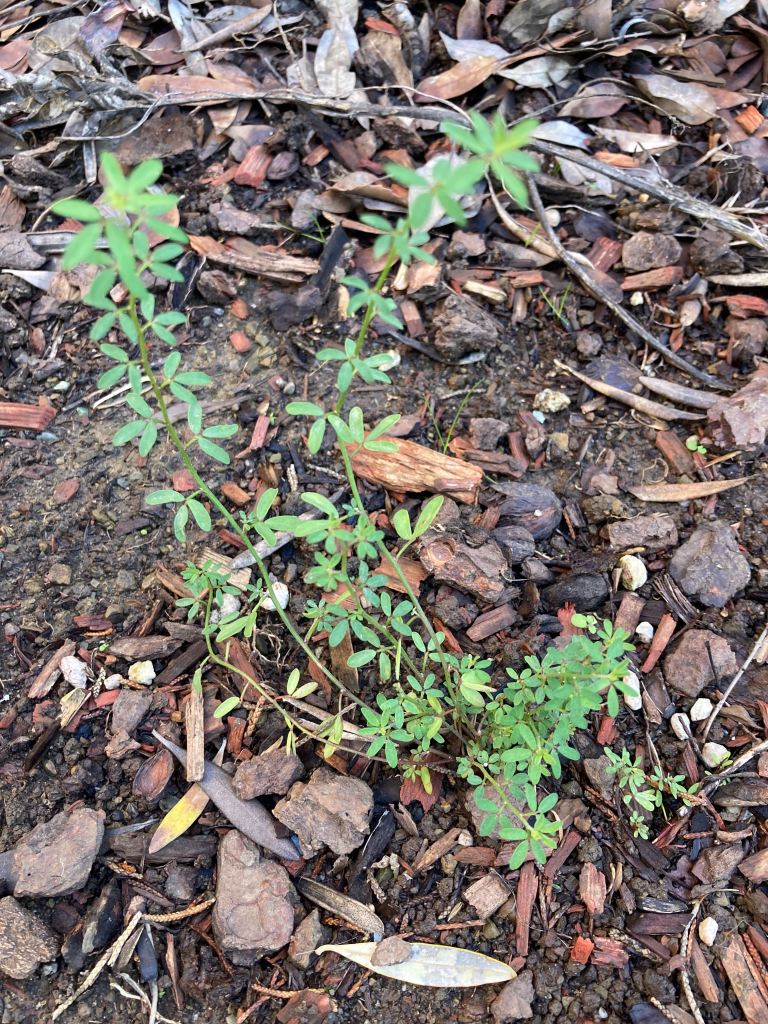
The most wonderful part for me has been all the life that the Deer Plants support! Amongst the spiky leaves and tiny yellow flowers, I’ve regularly found native ladybugs, bees, and pollinating flies and beetles. Most recently, I found several Skipper butterfly (I think) caterpillars munching away and then sticking leaves and branches together to cocoon themselves into.
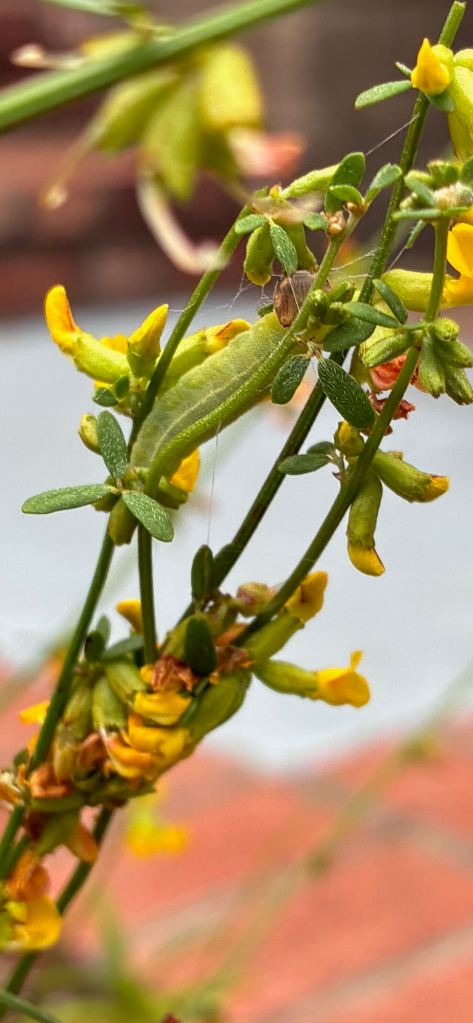
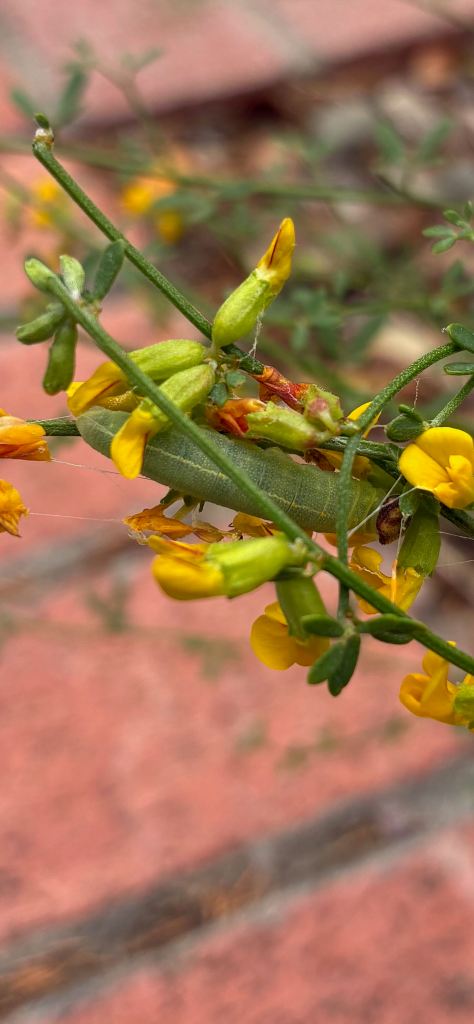
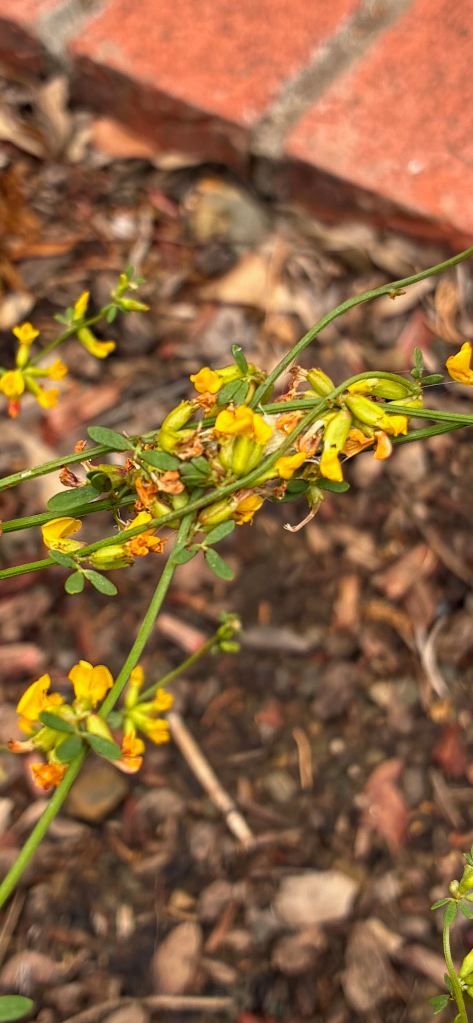
I’ve also noticed that, because they get so big so quickly, the Deer Plants provide some shade for other plants and the soil.
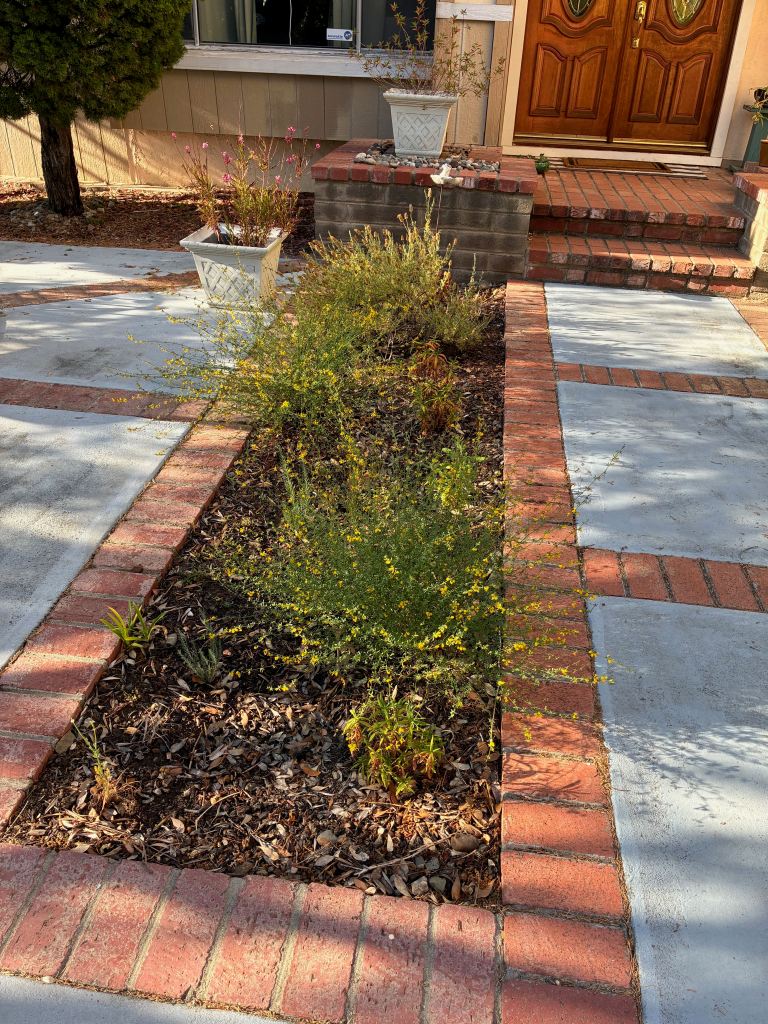
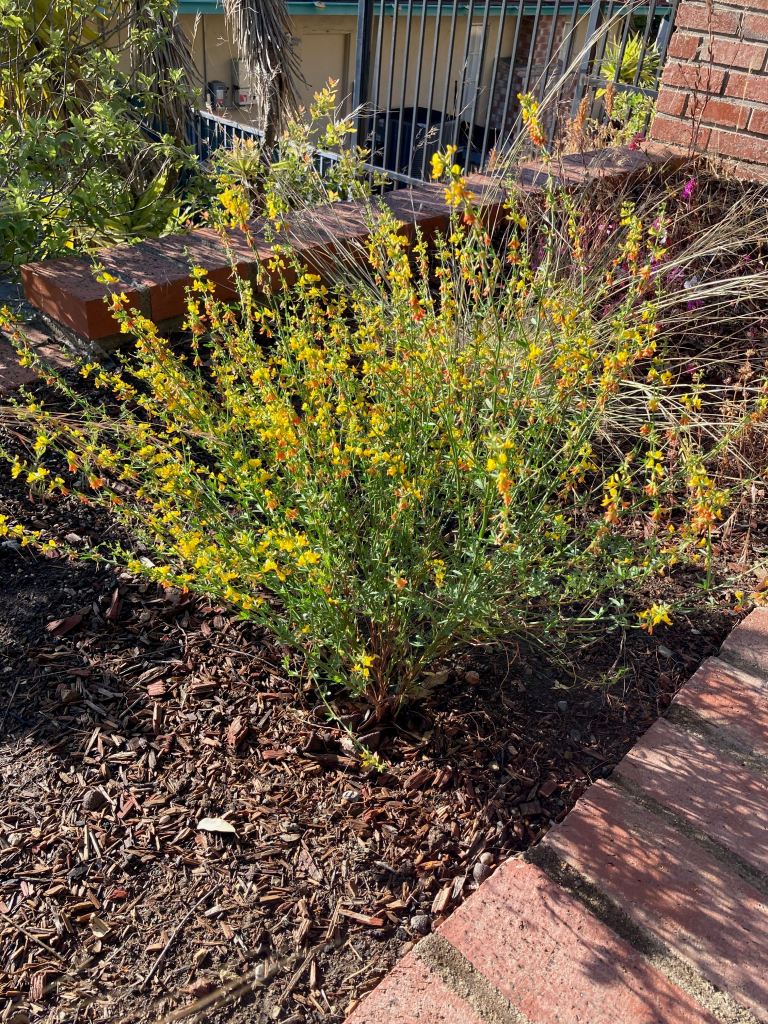
And then I have a theory about these wonderful plants. The Deer Plants tend to extend their shoots and branches over and around the plants next to them. I like to think that they’re hugging their native plant buddies who are having a harder time getting established. They don’t seem to choke them out or interfere with the other plants’ growth; they just extend an arm to lean on. I imagine they’re telling their neighbors through the unseen communication networks below the surface that it’s going to be okay.
They’re helping to heal the soil and make it better for everyone. And, I love them for it.


Leave a comment